
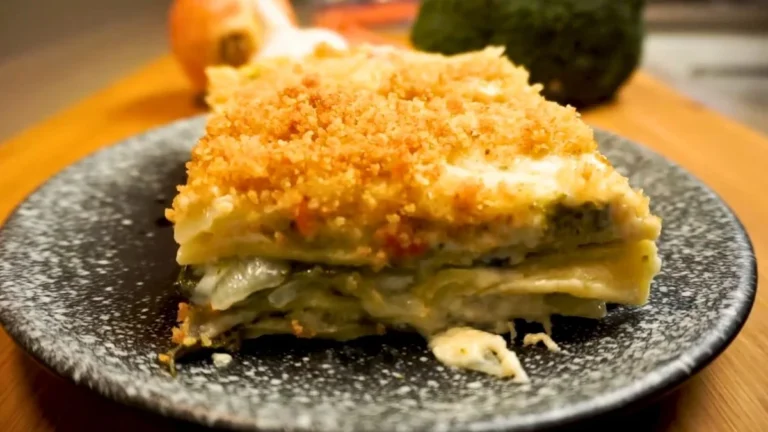

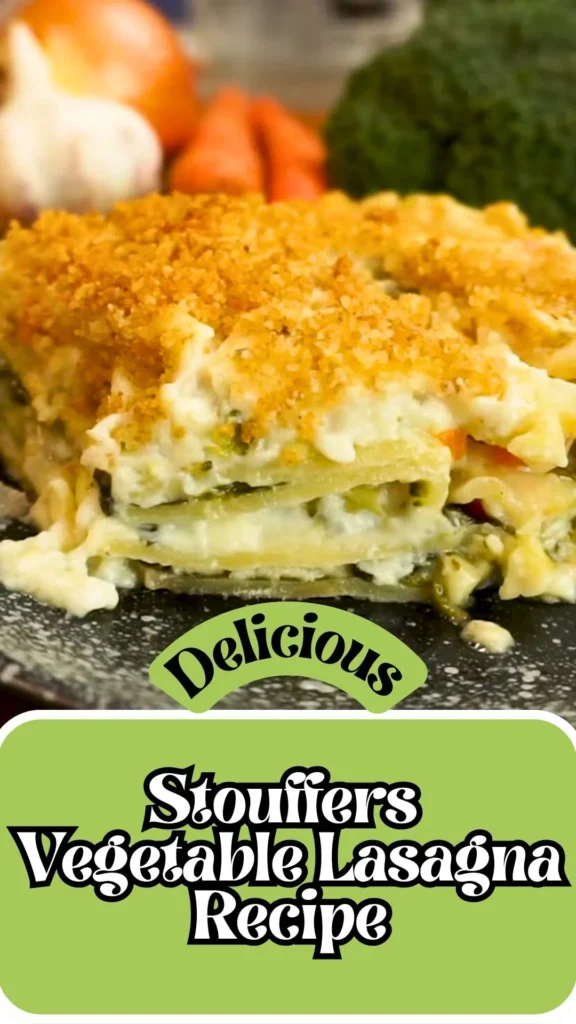
If you’ve ever pulled a Stouffer’s Vegetable Lasagna out of the freezer and wished you could recreate that creamy, garlicky comfort in your own kitchen, this copycat recipe delivers exactly that -without the freezer aisle.
Instead of a traditional tomato-based lasagna, this version is built on a rich garlic béchamel sauce layered with tender spinach, carrots, broccoli, and onion.
The real secret weapon here is the no-boil noodle method: regular lasagna noodles go into the pan completely uncooked, and a splash of extra water does the work of softening them right in the oven. The result is a creamy, hearty vegetable lasagna with far less prep and cleanup than the classic version -and it tastes every bit as satisfying as the original.
What Does Stouffer’s Vegetable Lasagna Taste Like?
This lasagna is rich, creamy, and deeply savory, with a flavor profile built almost entirely around garlic béchamel instead of tomato sauce. The white sauce is silky and assertively seasoned, carrying a warm garlic backbone with just enough black pepper to keep it interesting.
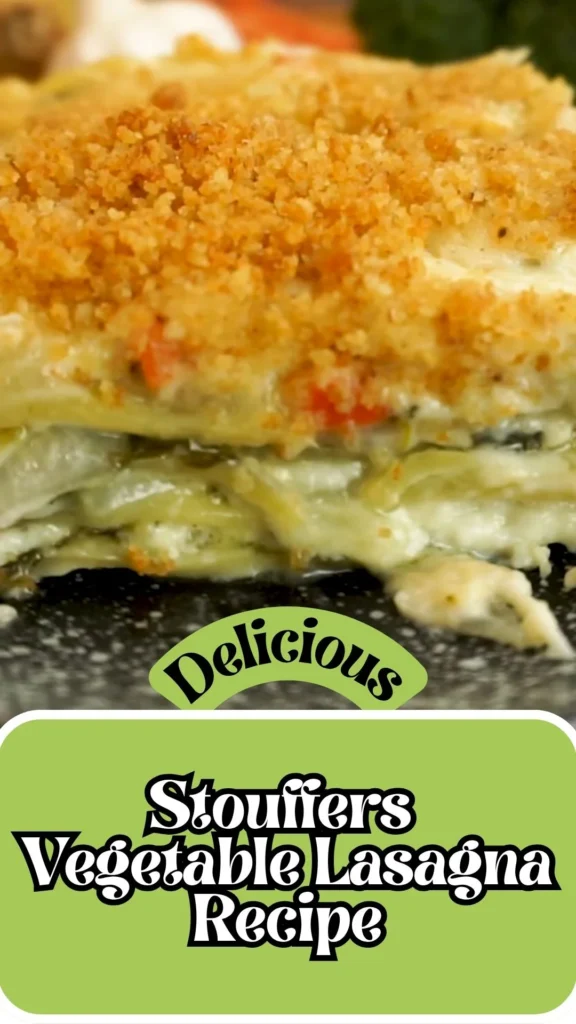
Melted mozzarella and nutty parmesan add pockets of gooey, salty richness throughout every layer. The vegetables -earthy spinach, sweet carrots, and tender broccoli -bring texture and a fresh, garden-like contrast to the creamy sauce, while a buttery, golden breadcrumb topping adds a satisfying crunch to finish.
It’s comfort food through and through, but noticeably lighter and brighter than a traditional red-sauce lasagna.
Ingredients & Kitchen Equipment
Ingredients
- ½ cup unsalted butter, melted -for the roux
- ½ cup all-purpose flour
- 2 garlic cloves
- 1 teaspoon kosher salt, plus more to taste
- ½ teaspoon cracked black pepper, to taste
- 4 cups whole milk
- 1 cup water -for the sauce
- 10 ounces fresh spinach, stems removed
- 3 carrots, peeled, julienned and diced small
- 1 head broccoli, cut into small florets
- 1 medium onion, peeled and diced
- 1 pound regular (not oven-ready) lasagna noodles, uncooked
- 4 ounces parmesan cheese, shredded, divided
- 10 ounces mozzarella cheese, shredded, divided
- ½ cup plain breadcrumbs
- 2½ tablespoons unsalted butter, melted -for the breadcrumb topping
- 2⅓ cups water -to hydrate the uncooked noodles
Kitchen Utensils
- Large saucepan (for the béchamel)
- Whisk
- 9×13-inch baking pan
- Sharp chef’s knife and cutting board
- Vegetable peeler
- Small mixing bowl (for breadcrumb topping)
- Measuring cups and spoons
- Aluminum foil
- Pastry brush or spoon (for oiling foil)
- Large spoon or spatula (for layering)
Preparation Time, Cooking Time & Servings
- Prep Time: 30 minutes
- Cook Time: 25 minutes (15 min covered + 10 min uncovered)
- Rest Time: 5–10 minutes
- Total Time: Approximately 55 minutes
- Servings: 8–10
- Difficulty: Easy
How to Make Stouffer’s-Style Vegetable Lasagna
Step 1 – Prep the Vegetables
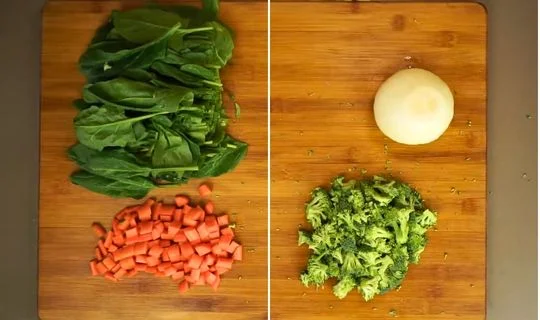
Trim and discard the stem ends from the fresh spinach. Peel the carrots, cut them into thin julienne strips, then chop them small. Cut the broccoli into small florets, discarding the tough root end. Peel and dice the onion. Set all the prepped vegetables aside together.
Step 2 – Make the Roux
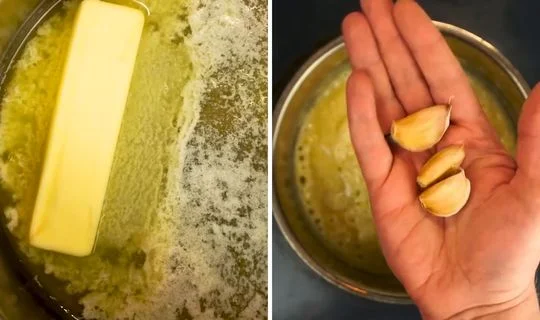
Melt the butter in a large saucepan over medium heat. Once mostly melted, whisk in the flour to form a roux. Cook for just 1–2 minutes to cook out the raw flour taste -don’t let it take on any color.
Step 3 – Add Garlic and Seasoning
Crush the garlic cloves directly into the roux and stir in the kosher salt and cracked black pepper. Let the garlic bloom in the butter for a few seconds before moving on.
Step 4 – Add Milk and Water, Bring to a Simmer
Whisk in the whole milk and water. Switch to a whisk and stir constantly as the sauce comes up to a simmer, until thickened. Cut the heat, then taste and adjust the salt -this sauce is the primary seasoning for the entire lasagna, so it should taste slightly saltier than you’d normally season it. A pinch of MSG here is optional.
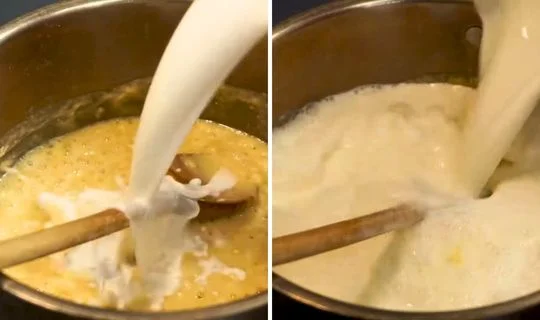
This béchamel is doing double duty as both sauce and seasoning, since there’s no tomato sauce to lean on. Don’t be shy with the salt here -under-seasoning the sauce is the single most common mistake with this style of lasagna.
Step 5 – Start Layering: Sauce and Noodles
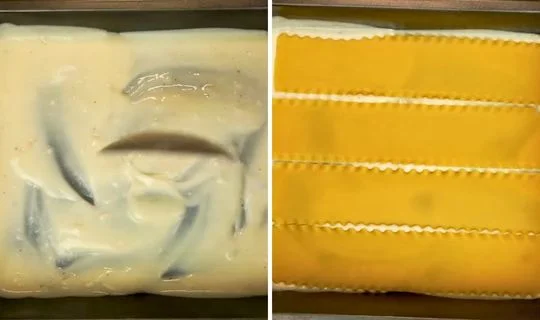
Spread a generous layer of the sauce over the bottom of a 9×13-inch baking pan -don’t skimp, or the bottom noodles can turn crunchy. Lay in a layer of the uncooked lasagna noodles. Use regular noodles, not oven-ready -there’s no need to pre-boil them.
Step 6 – Add Vegetables and Cheese
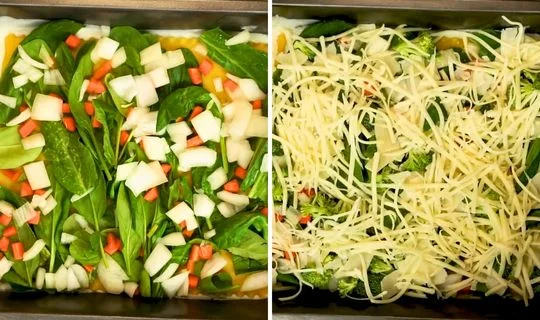
Scatter about a quarter of the prepped vegetables (spinach, carrots, broccoli, and onion) over the noodles. Sprinkle with about 1 ounce of the parmesan and 2–3 ounces of the mozzarella.
Step 7 – Repeat the Layers
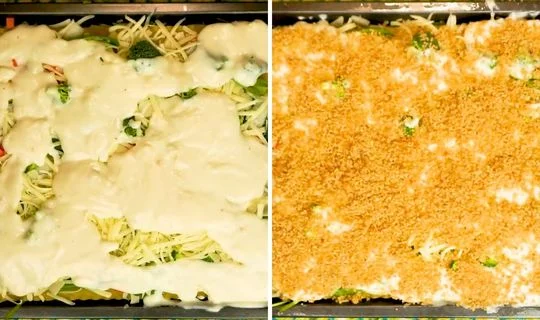
Repeat the entire sequence -sauce, noodles, vegetables, cheese – three more times, until the noodles are used up. You should end up with 4 full layers total.
Step 8 – Add the Breadcrumb Topping
Mix the breadcrumbs with the melted butter and sprinkle evenly over the top layer for a golden, crunchy finish.
Step 9 – Add Water for the No-Boil Noodles
Pour the reserved water evenly over the assembled lasagna so the raw noodles have enough liquid to fully cook through as they bake. Skip this step entirely if you pre-boiled your noodles.
Raw lasagna noodles absorb roughly 1.1–1.4 times their weight in water as they cook. For 1 pound of noodles, that works out to about 1.2 pounds (roughly 2¼ cups) of extra water poured directly over the dish before baking.
Step 10 – Cover and Bake
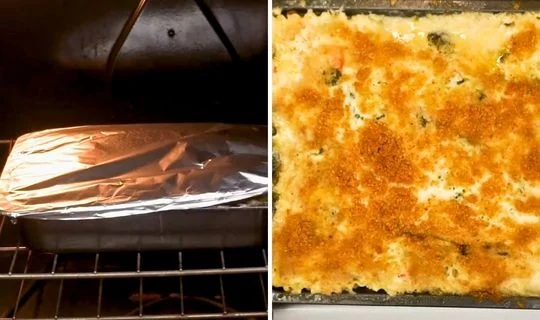
Lightly oil one side of a sheet of foil -this keeps it from sticking to the breadcrumb topping -then cover the pan tightly, oiled side down. Bake at 400°F (204°C) for about 15 minutes.
Step 11 – Uncover and Finish Baking
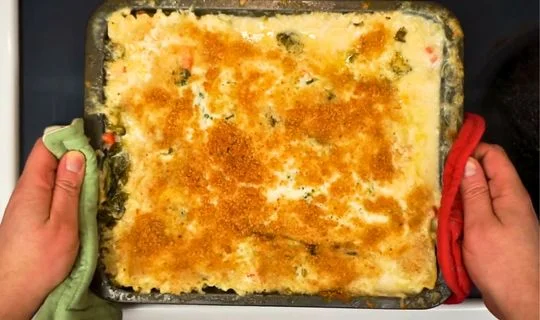
Carefully remove the foil and bake uncovered for another 10 minutes, until the top is golden and the sauce is bubbling at the edges.
Step 12 – Rest, Then Serve
Let the lasagna rest for 5–10 minutes before slicing. This resting time allows the layers to set so you get clean, sliceable pieces instead of a soupy mess.
Customization & Serving Ideas for Vegetable Lasagna
1. Swap in Seasonal Vegetables
This béchamel base is a blank canvas for whatever vegetables are in season. Zucchini, mushrooms, bell peppers, or roasted butternut squash all work beautifully in place of or alongside the broccoli and carrots.
2. Add a Protein Layer
For a heartier, non-vegetarian version, layer in cooked and crumbled Italian sausage or shredded rotisserie chicken between the vegetable layers. It adds bulk and a savory depth without disrupting the creamy sauce.
3. Use a Blend of Cheeses
While mozzarella and parmesan are the classic combination, try folding in a little fontina or gruyère for extra nuttiness, or ricotta between layers for an even creamier, richer bite.
4. Make It Spicy
Stir a pinch of red pepper flakes into the béchamel while it simmers, or add a few dashes of hot sauce to the vegetable layers for a subtle kick that cuts through the richness of the cream sauce.
5. Pair with a Simple Green Salad
Serve this rich, creamy lasagna alongside a crisp arugula or mixed greens salad with a sharp lemon vinaigrette. The acidity and freshness help balance the heaviness of the béchamel and cheese. For another crisp salad option, serve this vegetable lasagna with our olive garden caesar salad recipe for a refreshing contrast to the creamy béchamel, tender vegetables, and melted cheese.
6. Serve with Garlic Bread
Since the sauce is already garlic-forward, a side of warm, crusty garlic bread doubles down on that flavor and gives you something to scoop up any extra sauce left on the plate.
7. Make Individual Portions
Assemble the same layers in individual ramekins or a muffin tin lined with parchment for personal-sized lasagnas. This is a great option for meal prep or for entertaining guests with different dietary needs.
Tips for the Perfect No-Boil Vegetable Lasagna
1. Don’t Skip Salting the Sauce Generously
Since there’s no tomato sauce to season this dish, the béchamel is carrying all the flavor for the entire lasagna. It should taste slightly too salty on its own before baking -that seasoning mellows out once it’s spread across the noodles and vegetables.
2. Regular Noodles Work Just as Well as Oven-Ready
Oven-ready noodles are really just thinner, pre-cooked-and-dried noodles -they absorb about the same amount of water as regular noodles. This method works fine with either, so use whichever you have on hand and skip the boiling pot altogether.
3. Don’t Skimp on the Bottom Sauce Layer
The first layer of sauce at the bottom of the pan is what keeps the bottom noodles from drying out and turning crunchy or chewy. Spread it generously edge to edge before adding your first layer of noodles.
4. Whisk Constantly While the Béchamel Simmers
A béchamel sauce can scorch or develop lumps quickly if left unattended. Keep whisking constantly as the milk mixture comes up to a simmer to ensure a perfectly smooth, silky sauce.
5. Measure the Extra Water Carefully
The water poured over the assembled lasagna before baking is what cooks the raw noodles through -too little and you’ll end up with crunchy noodles, too much and the finished dish can turn watery. Stick close to the 2⅓ cup measurement for 1 pound of noodles.
6. Oil the Foil Before Covering
Lightly oiling one side of your foil before covering the pan prevents it from sticking to the melted cheese and breadcrumb topping, so you don’t tear off your golden crust when you uncover it.
7. Let It Rest Before Cutting
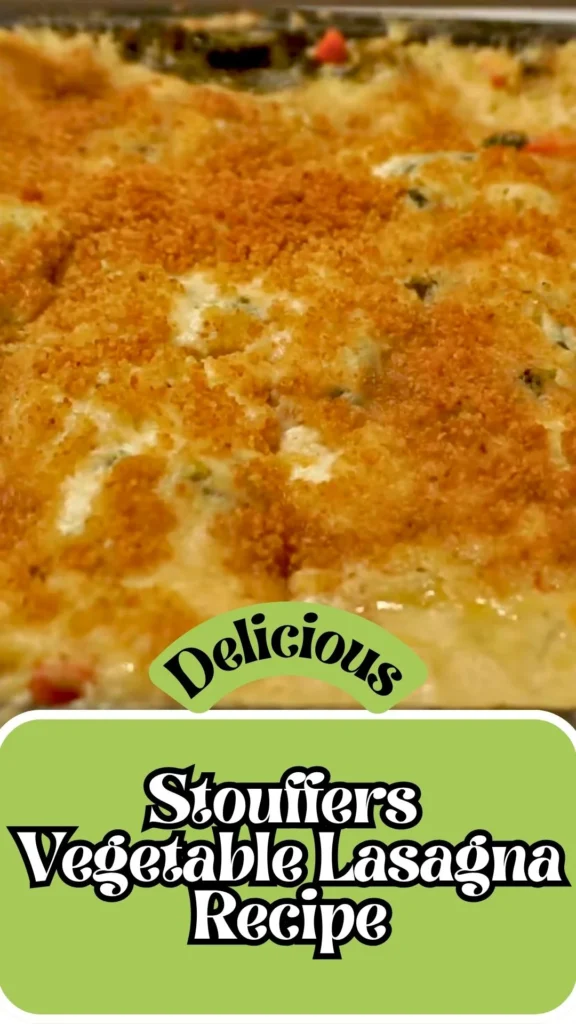
Cutting into the lasagna immediately after baking will cause the layers to slide apart and the sauce to run. Give it a full 5–10 minutes to rest so everything sets up into clean, structured slices.
Storage & Reheating Guidance
Store leftover lasagna covered in the refrigerator for up to 4 days, or freeze individual portions for up to 3 months. Reheat in a 350°F oven until warmed through, or microwave individual slices, adding a splash of milk if the sauce needs loosening.
Frequently Asked Questions About Stouffer’s Vegetable Lasagna
Here, we’ve got you covered with some common questions that people often ask.
Can I use oven-ready (no-boil) noodles instead of regular noodles?
Yes. Oven-ready noodles are simply thinner, pre-cooked-and-dried noodles that absorb roughly the same amount of water as regular noodles. You can use either type with this same no-boil method and water addition.
Do I really not need to boil the noodles first?
Correct -that’s the whole point of this technique. Raw noodles are layered directly into the pan, and the extra water poured over the assembled lasagna before baking gives them everything they need to fully cook through in the oven.
Why does the recipe call for so much salt in the sauce?
Because there’s no tomato sauce in this lasagna, the garlic béchamel is the only seasoning for the entire dish. It needs to taste noticeably salty on its own before baking, since that seasoning gets diluted once it’s spread across the noodles, vegetables, and cheese.
Can I make this vegetable lasagna ahead of time?
Yes. Assemble the full lasagna, cover tightly, and refrigerate for up to 24 hours before baking. If baking straight from the fridge, add a few extra minutes to the covered bake time since you’re starting from cold.
Can I freeze Stouffer’s-style vegetable lasagna?
Yes, this lasagna freezes well either before or after baking. To freeze unbaked, assemble everything except the breadcrumb topping, wrap tightly, and freeze for up to 3 months. Thaw overnight in the refrigerator before adding the topping and baking as directed.
What vegetables can I substitute in this lasagna?
The vegetable amounts in this recipe are flexible by design. Zucchini, mushrooms, bell peppers, or kale can all be swapped in for the spinach, carrots, or broccoli depending on what you have on hand or what’s in season.
Why is my lasagna watery after baking?
Excess liquid usually comes from vegetables like spinach or zucchini releasing moisture as they bake, or from slightly overdoing the water added for the no-boil noodles. Letting the lasagna rest for a full 5–10 minutes before slicing allows much of that liquid to reabsorb into the layers.
Is this recipe vegetarian?
Yes, as written this vegetable lasagna is fully vegetarian, relying on a garlic béchamel sauce, mozzarella, and parmesan for richness instead of meat. It is not vegan, since it contains butter, milk, and cheese.
Stouffers Vegetable Lasagna Recipe
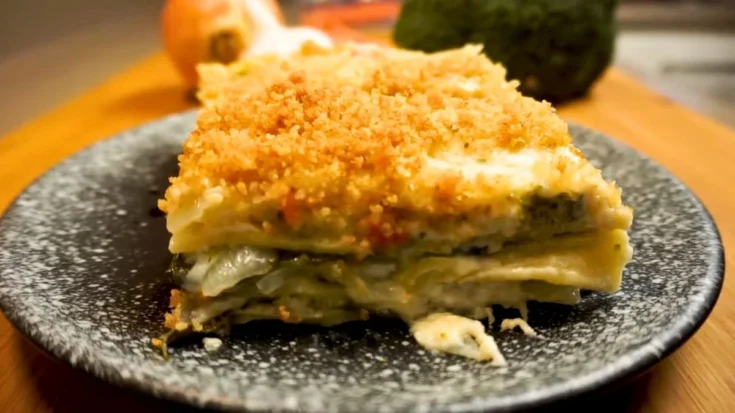
If you’ve ever pulled a Stouffer’s Vegetable Lasagna out of the freezer and wished you could recreate that creamy, garlicky comfort in your own kitchen, this copycat recipe delivers exactly that -without the freezer aisle.
Ingredients
- ½ cup unsalted butter, melted -for the roux
- ½ cup all-purpose flour
- 2 garlic cloves
- 1 teaspoon kosher salt, plus more to taste
- ½ teaspoon cracked black pepper, to taste
- 4 cups whole milk
- 1 cup water -for the sauce
- 10 ounces fresh spinach, stems removed
- 3 carrots, peeled, julienned and diced small
- 1 head broccoli, cut into small florets
- 1 medium onion, peeled and diced
- 1 pound regular (not oven-ready) lasagna noodles, uncooked
- 4 ounces parmesan cheese, shredded, divided
- 10 ounces mozzarella cheese, shredded, divided
- ½ cup plain breadcrumbs
- 2½ tablespoons unsalted butter, melted -for the breadcrumb topping
- 2⅓ cups water -to hydrate the uncooked noodles
Instructions
Step 1 – Prep the Vegetables
Trim and discard the stem ends from the fresh spinach. Peel the carrots, cut them into thin julienne strips, then chop them small. Cut the broccoli into small florets, discarding the tough root end. Peel and dice the onion. Set all the prepped vegetables aside together.
Step 2 – Make the Roux
Melt the butter in a large saucepan over medium heat. Once mostly melted, whisk in the flour to form a roux. Cook for just 1–2 minutes to cook out the raw flour taste -don’t let it take on any color.
Step 3 – Add Garlic and Seasoning
Crush the garlic cloves directly into the roux and stir in the kosher salt and cracked black pepper. Let the garlic bloom in the butter for a few seconds before moving on.
Step 4 – Add Milk and Water, Bring to a Simmer
Whisk in the whole milk and water. Switch to a whisk and stir constantly as the sauce comes up to a simmer, until thickened. Cut the heat, then taste and adjust the salt -this sauce is the primary seasoning for the entire lasagna, so it should taste slightly saltier than you’d normally season it. A pinch of MSG here is optional.
This béchamel is doing double duty as both sauce and seasoning, since there’s no tomato sauce to lean on. Don’t be shy with the salt here -under-seasoning the sauce is the single most common mistake with this style of lasagna.
Step 5 – Start Layering: Sauce and Noodles
Spread a generous layer of the sauce over the bottom of a 9×13-inch baking pan -don’t skimp, or the bottom noodles can turn crunchy. Lay in a layer of the uncooked lasagna noodles. Use regular noodles, not oven-ready -there’s no need to pre-boil them.
Step 6 – Add Vegetables and Cheese
Scatter about a quarter of the prepped vegetables (spinach, carrots, broccoli, and onion) over the noodles. Sprinkle with about 1 ounce of the parmesan and 2–3 ounces of the mozzarella.
Step 7 – Repeat the Layers
Repeat the entire sequence -sauce, noodles, vegetables, cheese – three more times, until the noodles are used up. You should end up with 4 full layers total.
Step 8 – Add the Breadcrumb Topping
Mix the breadcrumbs with the melted butter and sprinkle evenly over the top layer for a golden, crunchy finish.
Step 9 – Add Water for the No-Boil Noodles
Pour the reserved water evenly over the assembled lasagna so the raw noodles have enough liquid to fully cook through as they bake. Skip this step entirely if you pre-boiled your noodles.
Raw lasagna noodles absorb roughly 1.1–1.4 times their weight in water as they cook. For 1 pound of noodles, that works out to about 1.2 pounds (roughly 2¼ cups) of extra water poured directly over the dish before baking.
Step 10 – Cover and Bake
Lightly oil one side of a sheet of foil -this keeps it from sticking to the breadcrumb topping -then cover the pan tightly, oiled side down. Bake at 400°F (204°C) for about 15 minutes.
Step 11 – Uncover and Finish Baking
Carefully remove the foil and bake uncovered for another 10 minutes, until the top is golden and the sauce is bubbling at the edges.
Step 12 – Rest, Then Serve
Let the lasagna rest for 5–10 minutes before slicing. This resting time allows the layers to set so you get clean, sliceable pieces instead of a soupy mess.
Notes
Store leftover lasagna covered in the refrigerator for up to 4 days, or freeze individual portions for up to 3 months. Reheat in a 350°F oven until warmed through, or microwave individual slices, adding a splash of milk if the sauce needs loosening.
Nutrition Information:
Yield:
8Serving Size:
1Amount Per Serving: Calories: 610
We’d love to know how this recipe works out for you! Give it a try and leave a comment below to share your experience, tips, or any tweaks you made. Don’t forget to follow us on Pinterest and YouTube for more tasty recipes and kitchen inspiration. Your support and feedback truly mean everything to us!