


If you are obsessed with Trader Joe’s Lemon Pesto Sauce and find yourself grabbing a jar every single grocery run, wait until you taste this homemade version.
This Trader Joe’s Lemon Pesto Sauce recipe captures everything you love about the original – the bright citrusy zing, the creamy nutty richness, the fresh herbal pop of basil -but made entirely from scratch in just 10 minutes with real, wholesome ingredients.
Fresh lemon rinds and juice, Parmigiano-Reggiano, pine nuts, garlic, and fragrant basil blended into a silky, vibrant sauce that elevates pasta, chicken, fish, sandwiches, and so much more. Once you make this at home, you may never go back to the jar.
What Does Trader Joe’s Lemon Pesto Sauce Taste Like?
This lemon pesto sauce is an irresistible balance of bright and rich flavors that instantly wakes up any dish it touches. The dominant note is a bold, zesty lemon -from both the juice and the rind -that is more vivid and aromatic than standard basil pesto.

Underneath that citrusy brightness sits a creamy, nutty depth from the toasted pine nuts and Parmigiano-Reggiano, while the fresh basil adds a gentle herbal sweetness.
The garlic ties everything together with a subtle savory punch. The overall texture is smooth, silky, and luxuriously spreadable -equal parts vibrant and indulgent.
Ingredients & Kitchen Equipment
Ingredients
- ¼ cup lemon rinds (about the rinds of 2 lemons)
- 2½ tablespoons lemon juice (about the juice of one lemon)
- ½ cup Parmigiano-Reggiano, freshly grated
- 1 garlic clove
- ¼ cup pine nuts
- 5 fresh basil leaves
- ⅓ cup olive oil
- Salt to taste
Kitchen Utensils
- Food processor or high-powered blender
- Zester or sharp vegetable peeler (for lemon rinds)
- Citrus juicer or reamer
- Measuring cups and spoons
- Rubber spatula (for scraping the bowl)
- Fine grater or microplane (for parmesan)
- Airtight jar or container (for storing)
- Cutting board and chef’s knife
Preparation Time, Cooking Time & Servings
- Prep Time: 10 minutes
- Cook Time: 0 minutes
- Total Time: 10 minutes
- Yield: Approximately 1 cup (6 servings)
- Difficulty: Easy
How to Make Trader Joe’s Lemon Pesto Sauce
Step 1 -Prepare the Lemon Rinds and Juice
Using a sharp vegetable peeler or zester, carefully remove the outer rind of 2 lemons, avoiding as much of the bitter white pith as possible. You need approximately ¼ cup of lemon rinds. Then juice one lemon to get about 2½ tablespoons of fresh lemon juice. Set both aside. Always prep the rinds before juicing -it is much easier to peel a whole lemon than a squeezed one.
Step 2 -Measure and Prep All Ingredients
Grate the Parmigiano-Reggiano fresh from the block for the smoothest, most flavorful result. Peel the garlic clove, measure out the pine nuts, and rinse and pat dry the fresh basil leaves. Having everything prepped and measured before blending makes the process quick, clean, and effortless.
For a more mellow, less sharp garlic flavor, use a roasted garlic clove instead of raw. Simply wrap a clove in foil and roast at 400°F for 20 minutes. The result is sweeter and more complex -a wonderful upgrade to this lemon pesto sauce.
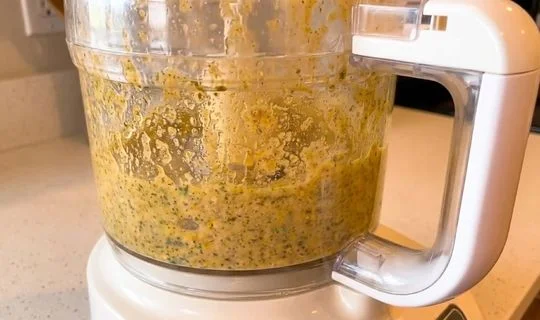
Step 3 -Combine All Ingredients in the Food Processor
Add the lemon rinds, lemon juice, grated Parmigiano-Reggiano, garlic clove, pine nuts, fresh basil leaves, and olive oil into the bowl of your food processor. Sprinkle in a pinch of salt to start -you can adjust the seasoning after blending.
Step 4 -Blend Until Smooth and Creamy
Process all the ingredients on high speed until the sauce is completely smooth and creamy, scraping down the sides of the bowl with a rubber spatula as needed. Blend for about 45–60 seconds for a silky, uniform consistency. If the sauce seems too thick, drizzle in a little extra olive oil and pulse a few more times until you reach your preferred texture.
Prefer a chunkier, more rustic pesto? Pulse the ingredients in short bursts rather than running the processor continuously. This gives you a coarser texture similar to traditional hand-crushed Genovese pesto.
Step 5 -Taste and Adjust Seasoning
Before transferring to a jar, taste the lemon pesto and adjust to your preference. Add more salt for depth, an extra squeeze of lemon juice for brightness, or a little more olive oil for a silkier, milder finish. This is your sauce -make it exactly how you love it.

Step 6 -Serve or Store
Use the lemon pesto sauce immediately, toss it through freshly cooked pasta, spread it on bread, or spoon it over grilled chicken or fish. To store, transfer to an airtight jar and press a thin layer of olive oil over the top of the sauce to prevent browning. Refrigerate until ready to use.
Customization & Serving Ideas for Lemon Pesto Sauce
1. Toss with Pasta for a 10-Minute Dinner
This homemade lemon pesto sauce is phenomenal tossed through linguine, spaghetti, or penne. Reserve a splash of pasta cooking water before draining -the starchy water helps the pesto emulsify into a silkier, more coating sauce. Add a handful of cherry tomatoes or a few sautéed shrimp to round it out into a full weeknight dinner in under 20 minutes total.
2. Use as a Spread on Sandwiches and Wraps
Swap your regular mayo or mustard for this bright lemon pesto as a sandwich spread. It pairs beautifully with grilled chicken, fresh mozzarella, roasted vegetables, or sliced turkey. Spread it generously on ciabatta, focaccia, or sourdough bread for an elevated lunch that tastes like something from an Italian café.
3. Drizzle Over Grilled Chicken or Fish
Lemon pesto is a natural companion for grilled or pan-seared proteins. Spoon it generously over grilled chicken breasts, pan-seared salmon, or a whole roasted branzino. The citrusy brightness of the sauce cuts through the richness of the meat and elevates a simple weeknight protein into something genuinely impressive.
4. Swirl Into Soups and Risotto
Add a spoonful of this Trader Joe’s Lemon Pesto Sauce Recipe to risotto for bright, herbal flavor, then serve it alongside our Olive Garden Herbed Risotto Recipe and olive garden house salad recipe for a fresh, satisfying meal.
5. Use as a Pizza or Flatbread Base
Replace traditional tomato sauce with this lemon pesto as the base for a white pizza or flatbread. Top with fresh mozzarella, arugula, shaved parmesan, and prosciutto for a stunning lemon pesto pizza that feels gourmet with minimal effort. It also makes an incredible base for a grilled vegetable flatbread appetizer.
6. Substitute Walnuts or Almonds for Pine Nuts
Pine nuts are classic in pesto, but they can be expensive. Swap them out for lightly toasted walnuts, blanched almonds, or even cashews for a more budget-friendly variation. Each nut brings its own character -walnuts are earthier and more robust, almonds are milder and creamier, while cashews produce the smoothest, most buttery texture of all.

7. Make It Vegan with Nutritional Yeast
Replace the Parmigiano-Reggiano with 3–4 tablespoons of nutritional yeast for a fully plant-based lemon pesto sauce. Nutritional yeast delivers a similar savory, cheesy umami quality without any dairy. This vegan version is just as bright and delicious, making it a fantastic option for dairy-free guests or plant-based meal prep.
Pro Tips for the Perfect Homemade Lemon Pesto Sauce
1. Use Only the Outer Lemon Rind -Avoid the White Pith
The white pith beneath the lemon’s outer skin is intensely bitter and will make your pesto unpleasantly harsh. Use a sharp vegetable peeler in thin, careful strokes to remove only the bright yellow outer layer. A microplane zester is an even safer tool for this -it removes fine zest rather than strips of rind, giving you a more uniform, milder citrus flavor throughout the sauce.
2. Always Use Fresh Parmigiano-Reggiano, Never Pre-Grated
The quality of your parmesan makes a dramatic difference in this sauce. Authentic Parmigiano-Reggiano has a complex, nutty, crystalline sharpness that pre-grated versions simply cannot replicate. Pre-grated parmesan also contains anti-caking agents that prevent it from blending into a smooth, creamy pesto. Grate it fresh from the block immediately before blending for best results.
3. Toast the Pine Nuts Before Blending
Raw pine nuts are mild and slightly bland. Toasting them in a dry skillet over medium heat for 2–3 minutes until golden transforms them into something nutty, aromatic, and deeply flavorful. Watch them carefully -pine nuts go from golden to burnt very quickly. Toasted pine nuts add an extra layer of complexity that makes this lemon pesto sauce genuinely exceptional.
4. Use High-Quality Extra-Virgin Olive Oil
Since olive oil is a primary ingredient -not just a cooking medium -its quality matters enormously here. A good extra-virgin olive oil with fruity, peppery notes will give your lemon pesto sauce a rich, smooth backbone. Avoid light or refined olive oils, which are flavorless by comparison. If your olive oil tastes great straight from the bottle, it will taste great in the sauce.
5. Add Olive Oil Gradually for Better Emulsification
Rather than pouring all the olive oil in at once, drizzle it in slowly through the feed tube of the food processor while it is running. This gradual addition allows the oil to emulsify more smoothly with the other ingredients, creating a creamier, more cohesive pesto rather than a greasy, separated one.
6. Taste Before Salting -Parmesan Is Already Salty
Parmigiano-Reggiano is a naturally salty cheese, and the salt level in your pesto will depend on how much parmesan you use and how finely it is grated. Always taste the blended sauce before adding extra salt. Start with just a small pinch, blend, taste again, and adjust gradually. Over-salting a batch of pesto is an easy mistake that is impossible to fix.

7. Store with an Olive Oil Seal to Prevent Oxidation
Fresh pesto oxidizes and turns brown quickly when exposed to air. After transferring your lemon pesto to a jar, press a thin film of extra-virgin olive oil over the entire surface of the sauce before sealing the lid. This simple olive oil seal creates a barrier against air contact and keeps your pesto vibrant, green, and fresh-tasting for several days longer.
Storage & Reheating Guidance
- Refrigerator: Store in an airtight jar with an olive oil seal on top for up to 5 days. The flavors actually deepen overnight as the ingredients meld together.
- Freezer: Freeze in an ice cube tray, then transfer cubes to a zip-lock bag for up to 3 months. Thaw individual portions as needed -perfect for quick weeknight pasta.
- Serving from cold: This pesto is best served at room temperature. Remove from the refrigerator 10–15 minutes before using and stir well before tossing with hot pasta or spreading on bread.
Frequently Asked Questions About Trader Joe’s Lemon Pesto Sauce
Here, we’ve got you covered with some common questions that people often ask.
What makes this lemon pesto different from regular basil pesto?
Traditional Genovese basil pesto uses a generous amount of fresh basil as its primary flavor. This Trader Joe’s inspired lemon pesto sauce uses lemon rind and lemon juice as the dominant flavoring, with basil playing a supporting role. The result is a brighter, more citrus-forward sauce with a lighter, more refreshing quality than classic basil pesto -perfect for spring and summer cooking.
Can I use lemon zest instead of lemon rinds?
Yes, and in fact lemon zest is often easier to work with and gives a slightly more refined result. Zest is simply the finely grated outer layer of the lemon peel. Use the same quantity -about ¼ cup -for consistent flavor. The key in both cases is to avoid the bitter white pith beneath the yellow skin.
Can I make lemon pesto without a food processor?
Yes. You can use a high-powered blender as a direct substitute for a food processor. For a more traditional approach, a mortar and pestle produces a beautifully textured, hand-crushed pesto -though it takes more time and effort. Start by grinding the garlic and pine nuts into a paste, then work in the basil, lemon, and parmesan, and finish by stirring in the olive oil.
Is this lemon pesto sauce gluten-free?
Yes, this recipe is naturally gluten-free. All the ingredients -lemon, parmesan, pine nuts, basil, garlic, and olive oil -contain no gluten. Always check that your parmesan and any jarred pine nuts are produced in a gluten-free facility if you have celiac disease or a serious gluten sensitivity.
How much pasta does this recipe make?
This recipe yields approximately 1 cup of lemon pesto sauce, which is enough to dress 12–16 ounces of cooked pasta for 4–6 servings. For a lighter coating, stretch it further with a splash of reserved pasta water. For a richer, more saucy pasta, use the full cup for 12 ounces of pasta.
Can I use pre-grated parmesan instead of Parmigiano-Reggiano?
You can, though the flavor and texture will be noticeably different. Pre-grated parmesan lacks the complex sharpness of authentic Parmigiano-Reggiano and contains additives that prevent smooth blending. If Parmigiano-Reggiano is unavailable, use freshly grated Pecorino Romano as a substitute -it is sharper and saltier, but blends beautifully and delivers a similar savory depth.
Why does my pesto turn brown so quickly?
Pesto oxidizes and loses its bright green color when exposed to air. This is a natural process caused by the enzymatic browning of the fresh basil leaves. To slow this down, press an olive oil seal over the top of your stored pesto, use an airtight container, and refrigerate immediately after making. Adding a small squeeze of extra lemon juice also helps preserve the color slightly, as the acidity slows oxidation.
Can I use bottled lemon juice instead of fresh?
Fresh lemon juice is strongly recommended for this recipe. Bottled lemon juice often has a slightly muted, processed flavor and lacks the aromatic complexity of freshly squeezed juice. Since lemon is the star flavor of this entire sauce, using fresh lemons makes a meaningful, noticeable difference in the final result. If you are in a pinch, bottled juice will work, but the freshness and brightness of the sauce will be somewhat diminished.
Trader Joe’s Lemon Pesto Sauce Recipe

This Trader Joe’s Lemon Pesto Sauce recipe captures everything you love about the original – the bright citrusy zing, the creamy nutty richness, the fresh herbal pop of basil -but made entirely from scratch in just 10 minutes with real, wholesome ingredients.
Ingredients
- ¼ cup lemon rinds (about the rinds of 2 lemons)
- 2½ tablespoons lemon juice (about the juice of one lemon)
- ½ cup Parmigiano-Reggiano, freshly grated
- 1 garlic clove
- ¼ cup pine nuts
- 5 fresh basil leaves
- ⅓ cup olive oil
- Salt to taste
Instructions
Step 1 -Prepare the Lemon Rinds and Juice
Using a sharp vegetable peeler or zester, carefully remove the outer rind of 2 lemons, avoiding as much of the bitter white pith as possible. You need approximately ¼ cup of lemon rinds. Then juice one lemon to get about 2½ tablespoons of fresh lemon juice. Set both aside. Always prep the rinds before juicing -it is much easier to peel a whole lemon than a squeezed one.
Step 2 -Measure and Prep All Ingredients
Grate the Parmigiano-Reggiano fresh from the block for the smoothest, most flavorful result. Peel the garlic clove, measure out the pine nuts, and rinse and pat dry the fresh basil leaves. Having everything prepped and measured before blending makes the process quick, clean, and effortless.
For a more mellow, less sharp garlic flavor, use a roasted garlic clove instead of raw. Simply wrap a clove in foil and roast at 400°F for 20 minutes. The result is sweeter and more complex -a wonderful upgrade to this lemon pesto sauce.
Step 3 -Combine All Ingredients in the Food Processor
Add the lemon rinds, lemon juice, grated Parmigiano-Reggiano, garlic clove, pine nuts, fresh basil leaves, and olive oil into the bowl of your food processor. Sprinkle in a pinch of salt to start -you can adjust the seasoning after blending.
Step 4 -Blend Until Smooth and Creamy
Process all the ingredients on high speed until the sauce is completely smooth and creamy, scraping down the sides of the bowl with a rubber spatula as needed. Blend for about 45–60 seconds for a silky, uniform consistency. If the sauce seems too thick, drizzle in a little extra olive oil and pulse a few more times until you reach your preferred texture.
Prefer a chunkier, more rustic pesto? Pulse the ingredients in short bursts rather than running the processor continuously. This gives you a coarser texture similar to traditional hand-crushed Genovese pesto.
Step 5 -Taste and Adjust Seasoning
Before transferring to a jar, taste the lemon pesto and adjust to your preference. Add more salt for depth, an extra squeeze of lemon juice for brightness, or a little more olive oil for a silkier, milder finish. This is your sauce -make it exactly how you love it.
Step 6 -Serve or Store
Use the lemon pesto sauce immediately, toss it through freshly cooked pasta, spread it on bread, or spoon it over grilled chicken or fish. To store, transfer to an airtight jar and press a thin layer of olive oil over the top of the sauce to prevent browning. Refrigerate until ready to use.
Notes
- Refrigerator: Store in an airtight jar with an olive oil seal on top for up to 5 days. The flavors actually deepen overnight as the ingredients meld together.
- Freezer: Freeze in an ice cube tray, then transfer cubes to a zip-lock bag for up to 3 months. Thaw individual portions as needed -perfect for quick weeknight pasta.
- Serving from cold: This pesto is best served at room temperature. Remove from the refrigerator 10–15 minutes before using and stir well before tossing with hot pasta or spreading on bread.
Nutrition Information:
Yield:
6Serving Size:
1Amount Per Serving: Calories: 90
This homemade Trader Joe’s Lemon Pesto Sauce recipe is proof that the best condiments are the ones you make yourself. With just 8 simple ingredients and 10 minutes of your time, you get a bright, creamy, restaurant-quality lemon pesto that outshines anything you can pull off a grocery store shelf. Toss it through pasta, drizzle it over grilled fish, spread it on sandwiches, or swirl it into soup – however you use it, this vibrant lemon pesto sauce will become one of the most versatile and beloved staples in your kitchen. Make a batch today and taste the difference fresh ingredients make.
We’d love to know how this recipe works out for you! Give it a try and leave a comment below to share your experience, tips, or any tweaks you made. Don’t forget to follow us on Pinterest and YouTube for more tasty recipes and kitchen inspiration. Your support and feedback truly mean everything to us!