
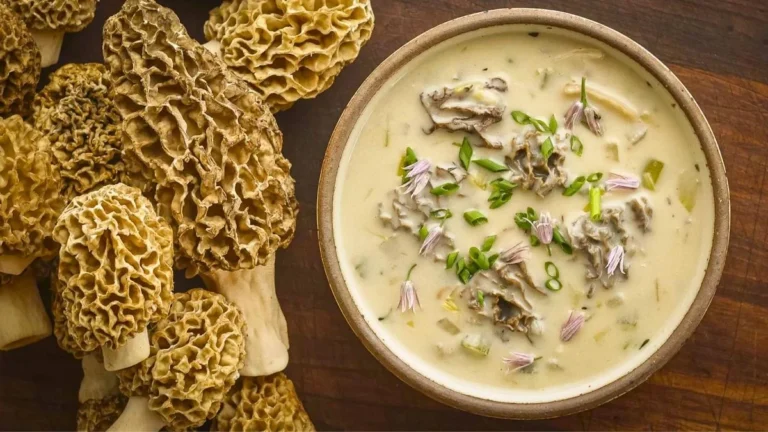

If you have ever been lucky enough to get your hands on fresh morel mushrooms, you already know they deserve something special. This Cream of Fresh Morel Mushroom Soup is exactly that -a rich, velvety, deeply savory soup that puts the wild, earthy flavor of morels front and center.
Built on a slow-cooked aromatic vegetable base, thickened with flour, brightened with a splash of white wine, and finished with heavy cream, this recipe transforms even the largest, most mature end-of-season morels into something truly extraordinary.
Whether you foraged them yourself or found them at a farmers market, this is the morel mushroom soup recipe you will want to make every spring.
What Does Cream of Morel Mushroom Soup Taste Like?
This soup is deeply earthy, rich, and luxuriously creamy with a flavor that is entirely its own. Fresh morel mushrooms bring a nutty, smoky, almost woodsy intensity that no other mushroom can replicate -and slow-cooking them in butter draws out every bit of that complexity.
The mirepoix base of onion, celery, and leek adds a subtle sweetness and depth, while white wine cuts through the richness with a gentle, floral acidity.
The heavy cream rounds everything out into a smooth, velvety finish. Each spoonful is earthy, savory, and warming -like the forest floor translated into a bowl of comfort.
Ingredients & Kitchen Equipment
Ingredients
- Fresh morel mushrooms -a generous amount; larger, older morels work beautifully here
- Unsalted butter -for sautéing the vegetables and mushrooms
- Onion -finely diced (small dice)
- Celery -finely diced (small dice)
- Leek -finely diced (small dice; white and light green parts only)
- Pinch of dried thyme -optional, adds a gentle herbal note
- All-purpose flour -a generous amount; this is the primary thickener
- Dry white wine -just a splash, for deglazing
- Chicken stock -homemade preferred; add gradually (approximately 4–5 cups)
- Heavy cream -stirred in at the end for richness
- Cooked wild rice -optional but highly recommended for texture and heartiness
- Salt and freshly ground black pepper -to taste
Kitchen Utensils
- Large heavy-bottomed pot or Dutch oven
- Wooden spoon or heat-safe spatula
- Sharp chef’s knife and cutting board
- Large bowl or clean sink (for washing morels)
- Colander or strainer (for draining morels)
- Ladle (for adding stock gradually and serving)
- Measuring cups and spoons
- Soup bowls for serving
Preparation Time, Cooking Time & Servings
- Prep Time: 15 minutes
- Cook Time: 40 minutes
- Total Time: ~55 minutes
- Servings: 4–6
- Difficulty: Easy–Medium
How to Make Cream of Fresh Morel Mushroom Soup
Step 1 -Clean the Morel Mushrooms
Place the fresh morels in a sink full of cold water or a large bowl and swish them gently to dislodge any grit, sand, or hidden debris from inside the honeycomb caps. Morels are hollow and can trap dirt easily, so do not rush this step. Lift them out of the water rather than pouring them through a strainer (so the grit stays behind), then drain well and lay them on a clean kitchen towel to dry slightly.
Step 2 -Cut the Morels into Bite-Sized Pieces
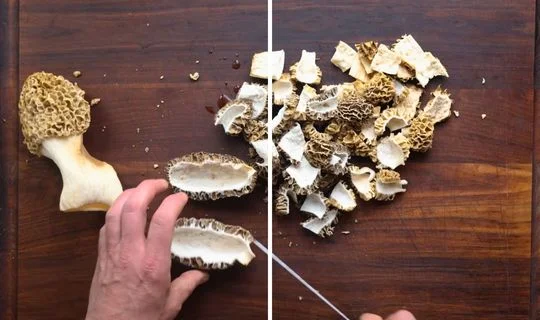
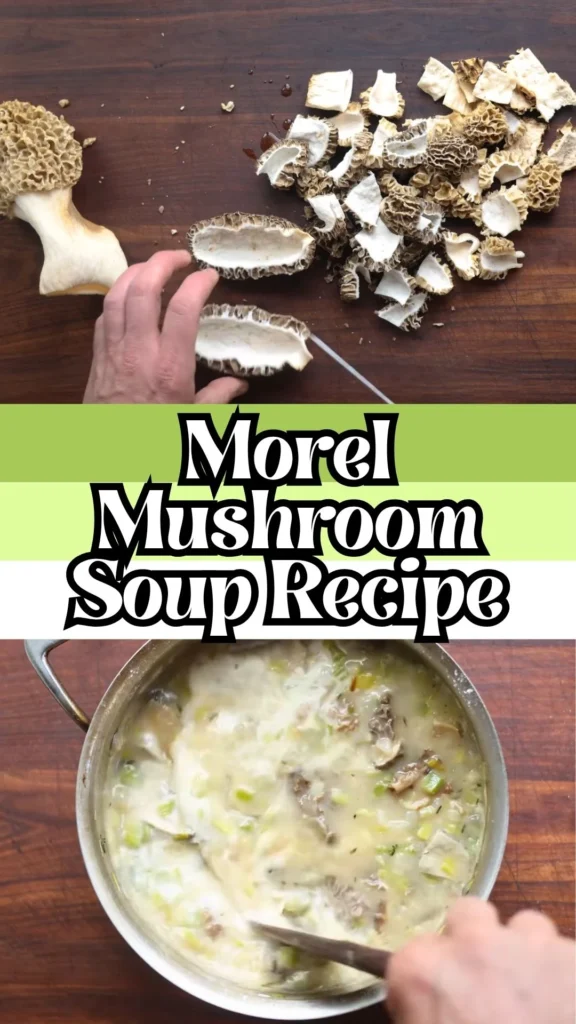
Cut the cleaned morels into bite-sized pieces. Slightly larger pieces are preferred here – they hold their texture better through the slow cook, catch the butter and juices beautifully, and give the finished soup satisfying, recognizable chunks of mushroom in every spoonful. Avoid cutting them too small, as they will essentially dissolve into the soup during cooking.
This recipe is an excellent use for larger, older morels at the end of the season -the ones that may be too mature and robust for a simple sauté but are absolutely perfect for a long, slow braise in a creamy soup.
Step 3 -Slowly Cook the Aromatic Vegetables
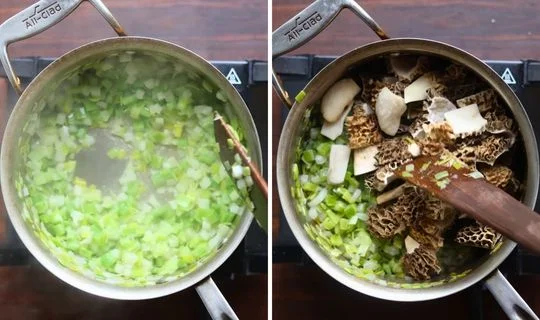
Melt a generous knob of butter in a large heavy-bottomed pot over medium heat. Add the finely diced onion, celery, and leek. Cook slowly, stirring occasionally, for about 25 minutes until the vegetables are very soft, sweet, and completely tender -they should almost melt into the base of the pot. Do not rush this step; the slow cook is what builds the deep, sweet foundation the soup needs. Add a pinch of dried thyme during this stage if desired.
Step 4 -Add the Morels and Cook Slowly
Add the cut morel mushrooms to the pot with the softened vegetables. Stir to combine and continue cooking over medium-low heat, allowing the morels to release their moisture and flavor slowly into the vegetable base. This stage is where the true depth of the soup develops -the earthy morel juices meld with the sweet aromatics and butter to create an incredibly fragrant base.
Step 5 -Add the Flour
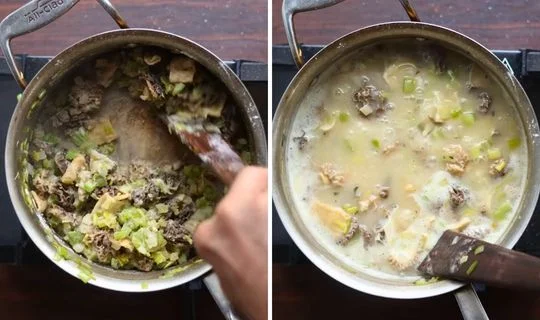
Sprinkle a generous amount of all-purpose flour over the mushroom and vegetable mixture. Stir well to coat everything evenly. The mixture will become sticky and look somewhat paste-like at this stage -this is completely normal and exactly what you want. The flour is your primary thickener, and fully coating the vegetables and mushrooms ensures there are no raw-flour lumps in the finished soup.
Step 6 -Deglaze with White Wine
Add a small splash of dry white wine to the pot. Stir well and allow the flour to absorb the wine completely before adding anything else. This step lifts any flavorful bits from the bottom of the pot, adds a gentle acidity that balances the richness of the butter and cream to come, and helps activate the flour thickener.
Step 7 -Add Chicken Stock and Simmer
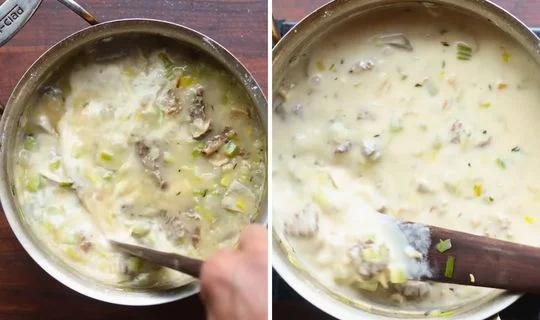
Begin adding the chicken stock gradually, ladleful by ladleful, stirring as you pour to ensure a smooth, lump-free consistency. Once all the stock is incorporated, bring the soup to a gentle simmer. Do not let it reach a hard, rolling boil -a gentle simmer is all you need. Simmer until the morels are fully cooked through, the flour is completely integrated, and the flavors have melded into a cohesive, rich broth. Taste and adjust seasoning as you go.
Homemade chicken stock makes a noticeable difference in this soup. Its natural gelatin content adds body and richness that store-bought broth simply cannot match. If using store-bought, choose a low-sodium, high-quality version.
Step 8 -Finish with Heavy Cream
Stir in the heavy cream and reduce the heat to the lowest setting. Heat the soup very gently -you do not want to boil or aggressively simmer the cream, as this can break the emulsion and cause the soup to look greasy or grainy rather than smooth and velvety. Stir slowly and allow the cream to fully incorporate into the soup over gentle heat. Note that the soup will thicken further as it cools and is even more flavorful the next day.
Step 9 -Add Wild Rice (Optional but Recommended)
If using cooked wild rice, stir it into the finished soup just before serving. Parched or toasted wild rice adds a wonderful nutty chewiness and heartiness that complements the soft, creamy mushroom base beautifully. It also makes the soup more substantial as a main-course bowl.
Step 10 -Season and Serve
Taste the finished soup and adjust the seasoning with salt and freshly cracked black pepper. Ladle into warm soup bowls and serve immediately while hot.
Customization & Serving Ideas for Morel Mushroom Soup
1. Stir in Toasted Wild Rice for a Heartier Bowl
As the recipe itself suggests, cooked wild rice transforms this from an elegant starter into a satisfying main-course soup. Parched or lightly toasted wild rice adds a slightly smoky, nutty bite that echoes the earthy depth of the morels. Cook the wild rice separately and stir it in just before serving so it retains its texture and does not become mushy in the cream broth.
2. Blend Half the Soup for a Luxurious Velvety Texture
For an even silkier finish, use an immersion blender to partially blend the soup directly in the pot -blending roughly half while leaving the rest chunky. This technique creates a creamy, restaurant-style cream of mushroom soup base while still keeping recognizable pieces of morel and vegetable in every spoonful. It is the best of both textures in a single bowl.
3. Use a Blend of Wild Mushrooms When Morels Are Scarce
Fresh morel mushrooms have a short season. When they are unavailable, extend the recipe by combining dried reconstituted morels with fresh cremini, shiitake, or porcini mushrooms. Add the strained morel soaking liquid to the soup along with the chicken stock for an additional layer of deep, concentrated mushroom flavor.
4. Swap Chicken Stock for Vegetable Stock to Make It Vegetarian
Replace the chicken stock with a rich, full-flavored vegetable stock to make this soup completely vegetarian. Choose a vegetable stock made with roasted vegetables or mushroom trimmings for the deepest flavor. The swap works seamlessly, and the morel mushrooms provide more than enough savory depth to carry the soup without any animal-based broth.
5. Finish with a Drizzle of Truffle Oil for Special Occasions
A small drizzle of white or black truffle oil swirled into each bowl at serving adds a luxurious, aromatic depth that pairs exceptionally well with morels. This is a simple touch that takes the soup from excellent weeknight comfort food to dinner-party-worthy elegance. Use sparingly -a few drops per bowl is all you need.
6. Serve with Crusty Sourdough or Warm Brioche Rolls
Round out this Morel Mushroom Soup Recipe with our olive garden italian salad recipe and Olive Garden Herbed Risotto Recipe for an elegant, restaurant-inspired meal featuring fresh greens, creamy textures, and rich, comforting flavors.
7. Garnish with Fresh Chives, Crème Fraîche, or Sautéed Morel Caps
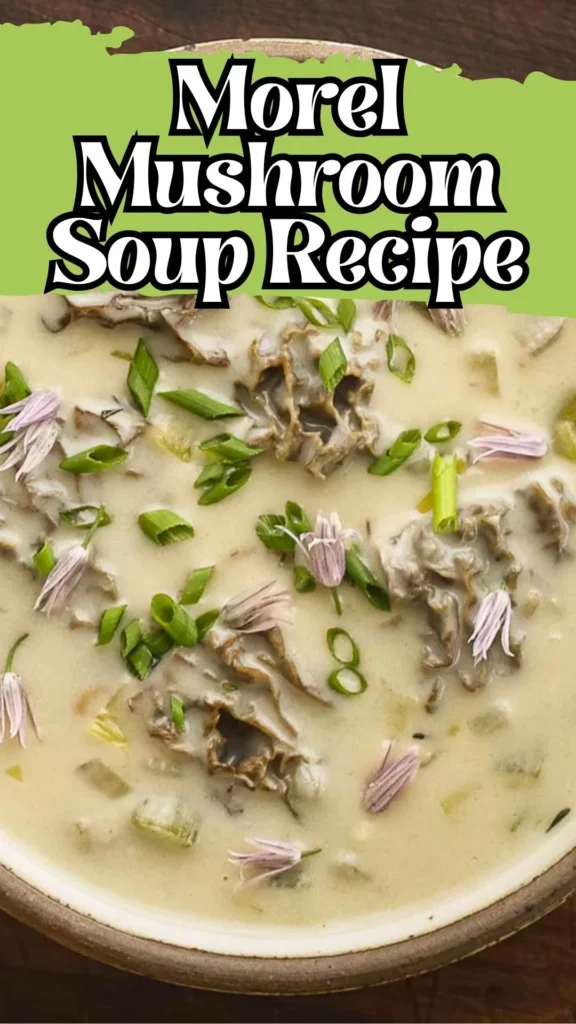
Presentation matters -especially for a soup this special. Reserve a few small morel caps, sauté them quickly in butter, and place them on top of each bowl as a garnish. A small dollop of crème fraîche, a few snipped fresh chives, or a pinch of flaky sea salt on the surface add visual elegance and a final burst of flavor that makes the bowl feel truly finished and restaurant-worthy.
Pro Tips for the Perfect Morel Mushroom Soup
1. Never Skip the Long Vegetable Cook
The 25-minute slow cook of the onion, celery, and leek is the soul of this soup. Rushing this step by cranking up the heat produces a sharp, raw-tasting base rather than the sweet, deeply mellow foundation the soup needs. Cook low and slow, stir occasionally, and wait until the vegetables are completely soft, translucent, and almost caramelized before moving on. The patience pays off in every spoonful.
2. Wash Morels Thoroughly but Gently
Fresh morel mushrooms are hollow and their honeycomb surface traps grit, sand, insects, and debris with alarming efficiency. Swish them gently in a large bowl or sink full of cold water, then lift them out by hand rather than pouring them into a strainer -this ensures any released grit stays in the water. If they are particularly dirty, repeat the rinse. Do not soak them for long periods, as they will begin to absorb water.
3. Add Stock Gradually to Prevent Lumps
After adding the flour and wine, resist the temptation to pour in all the stock at once. Add it one ladleful at a time, stirring thoroughly after each addition. This gradual incorporation ensures the flour hydrates smoothly into the liquid without forming lumps. It takes an extra 2–3 minutes but makes the difference between a silky, professional-quality soup and a lumpy, uneven one.
4. Never Boil the Soup After Adding Cream
Heavy cream is stable enough for gentle heating, but aggressive boiling or a hard simmer after it is added can cause the fat and liquid to separate, resulting in a greasy, broken-looking soup. Always reduce the heat to the lowest possible setting before stirring in the cream, and heat gently until just hot enough to serve. If reheating leftovers, the same rule applies -low and slow only.
5. Make It a Day Ahead for Even Better Flavor
Like most cream-based mushroom soups, this morel mushroom soup genuinely improves overnight. The flavors continue to deepen and meld as the soup rests, and the texture becomes even richer and more cohesive by the next day. Make it the evening before a dinner party, store it in the refrigerator, and reheat gently on the stove just before serving. Your guests will never know how little effort was involved.
6. Season at the End, Not the Beginning
Chicken stock- especially homemade -can vary significantly in saltiness, and the heavy cream and flour both affect the overall seasoning balance as the soup develops. Hold off on major seasoning adjustments until the very end, once the cream is incorporated and the soup is at its final consistency. Taste, adjust, taste again. A final pinch of good flaky sea salt right before serving makes every flavor pop.
7. Use a Heavy-Bottomed Pot to Prevent Scorching
A Dutch oven or heavy-bottomed stainless steel pot is essential for this recipe. Thin pots develop hot spots that can scorch the flour-based soup, particularly during the long vegetable cook and the simmering stage. A heavy pot distributes heat evenly and retains it steadily, giving you much more control over the gentle, consistent heat this soup requires from start to finish.
Storage & Reheating Guidance
- Refrigerator: Store in an airtight container for up to 3 days. The soup thickens significantly when cold -this is normal.
- Freezer: Not recommended. The cream-based broth can separate and become grainy upon thawing.
- Reheat: Warm gently over low heat on the stovetop, stirring frequently. Add a small splash of chicken stock or water to loosen the consistency if needed. Never boil.
Frequently Asked Questions About Morel Mushroom Soup
Can I use dried morel mushrooms instead of fresh?
Yes. Dried morels can substitute for fresh, though the flavor will be more concentrated and slightly different in texture. Rehydrate them in warm water for 20–30 minutes, then drain and reserve the soaking liquid. Strain the soaking liquid through a fine mesh sieve or coffee filter to remove any grit, then add it to the soup along with the chicken stock for an extra boost of deep morel flavor.
What do morel mushrooms taste like?
Fresh morel mushrooms have a distinctly earthy, nutty, and slightly smoky flavor with a meaty, spongy texture. They are often described as the most complex and deeply flavored of all wild mushrooms, with an umami richness that deepens significantly when cooked in butter. Their flavor is woodsy and wild without being overpowering -entirely unique and unlike any cultivated mushroom.
Are morel mushrooms safe to eat?
Yes, true morel mushrooms (genus Morchella) are safe to eat and widely prized as a culinary delicacy. However, they must always be cooked before eating -raw morels can cause digestive upset. Also, morels can be confused with false morels (such as Gyromitra species), which are toxic. Always source morels from a trusted forager, reputable farmers market, or specialty grocery store. When in doubt, consult an expert before consuming any foraged mushroom.
Can I make this morel mushroom soup gluten-free?
Yes. Substitute the all-purpose flour with a gluten-free flour blend or use cornstarch as the thickener instead. If using cornstarch, mix it with a small amount of cold stock or water to form a slurry and add it after the wine, rather than coating the vegetables directly. The soup will thicken beautifully and be completely gluten-free without any noticeable difference in flavor.
What is the best white wine to use in mushroom soup?
A dry white wine works best -Sauvignon Blanc, Pinot Grigio, or a dry Chardonnay are all excellent choices. Avoid sweet or semi-sweet wines, as they will add unwanted sweetness to the savory base. You only need a small splash for deglazing, so use a wine you would be happy to drink -cooking wine products from a bottle are an acceptable substitute if needed.
Can I make this soup vegetarian or vegan?
For a vegetarian version, simply swap the chicken stock for a rich vegetable stock -the soup works beautifully either way. For a fully vegan version, also replace the butter with a good quality olive oil or vegan butter alternative and substitute the heavy cream with full-fat coconut cream or a cashew cream. The flavor will be slightly different but still deeply satisfying and rich.
Why does my cream mushroom soup look grainy or separated?
Graininess or separation in a cream-based soup is almost always caused by overheating after the cream is added. Boiling heavy cream breaks the fat-water emulsion, causing it to look curdled or greasy. The fix: always add cream off the heat or over the very lowest heat setting, stir gently, and never let the soup reach a boil after this point. When reheating leftovers, use low heat and stir frequently.
When is morel mushroom season?
Fresh morel mushrooms have a short, highly anticipated season that runs roughly from late March through May in most of North America, depending on region, elevation, and weather conditions. They tend to emerge after warm spring rains, particularly in wooded areas near elm, ash, and apple trees. In the Midwest and Great Lakes region, peak season is typically mid-April to early May. After the season ends, dried morels are the best substitute.
Morel Mushroom Soup Recipe
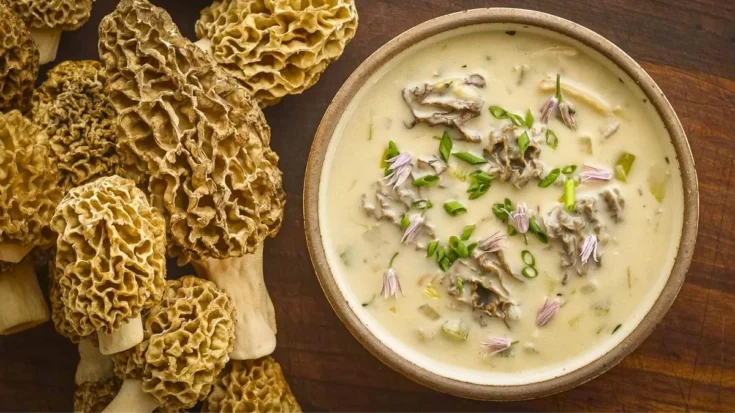
If you have ever been lucky enough to get your hands on fresh morel mushrooms, you already know they deserve something special. This Cream of Fresh Morel Mushroom Soup is exactly that -a rich, velvety, deeply savory soup that puts the wild, earthy flavor of morels front and center.
Ingredients
- Fresh morel mushrooms
- Unsalted butter
- Onion
- Celery
- Leek
- Pinch of dried thyme
- All-purpose flour
- Dry white wine
- Chicken stock
- Heavy cream
- Cooked wild rice
- Salt
Instructions
Step 1 -Clean the Morel Mushrooms
Place the fresh morels in a sink full of cold water or a large bowl and swish them gently to dislodge any grit, sand, or hidden debris from inside the honeycomb caps. Morels are hollow and can trap dirt easily, so do not rush this step. Lift them out of the water rather than pouring them through a strainer (so the grit stays behind), then drain well and lay them on a clean kitchen towel to dry slightly.
Step 2 -Cut the Morels into Bite-Sized Pieces
Cut the cleaned morels into bite-sized pieces. Slightly larger pieces are preferred here – they hold their texture better through the slow cook, catch the butter and juices beautifully, and give the finished soup satisfying, recognizable chunks of mushroom in every spoonful. Avoid cutting them too small, as they will essentially dissolve into the soup during cooking.
This recipe is an excellent use for larger, older morels at the end of the season -the ones that may be too mature and robust for a simple sauté but are absolutely perfect for a long, slow braise in a creamy soup.
Step 3 -Slowly Cook the Aromatic Vegetables
Melt a generous knob of butter in a large heavy-bottomed pot over medium heat. Add the finely diced onion, celery, and leek. Cook slowly, stirring occasionally, for about 25 minutes until the vegetables are very soft, sweet, and completely tender -they should almost melt into the base of the pot. Do not rush this step; the slow cook is what builds the deep, sweet foundation the soup needs. Add a pinch of dried thyme during this stage if desired.
Step 4 -Add the Morels and Cook Slowly
Add the cut morel mushrooms to the pot with the softened vegetables. Stir to combine and continue cooking over medium-low heat, allowing the morels to release their moisture and flavor slowly into the vegetable base. This stage is where the true depth of the soup develops -the earthy morel juices meld with the sweet aromatics and butter to create an incredibly fragrant base.
Step 5 -Add the Flour
Sprinkle a generous amount of all-purpose flour over the mushroom and vegetable mixture. Stir well to coat everything evenly. The mixture will become sticky and look somewhat paste-like at this stage -this is completely normal and exactly what you want. The flour is your primary thickener, and fully coating the vegetables and mushrooms ensures there are no raw-flour lumps in the finished soup.
Step 6 -Deglaze with White Wine
Add a small splash of dry white wine to the pot. Stir well and allow the flour to absorb the wine completely before adding anything else. This step lifts any flavorful bits from the bottom of the pot, adds a gentle acidity that balances the richness of the butter and cream to come, and helps activate the flour thickener.
Step 7 -Add Chicken Stock and Simmer
Begin adding the chicken stock gradually, ladleful by ladleful, stirring as you pour to ensure a smooth, lump-free consistency. Once all the stock is incorporated, bring the soup to a gentle simmer. Do not let it reach a hard, rolling boil -a gentle simmer is all you need. Simmer until the morels are fully cooked through, the flour is completely integrated, and the flavors have melded into a cohesive, rich broth. Taste and adjust seasoning as you go.
Homemade chicken stock makes a noticeable difference in this soup. Its natural gelatin content adds body and richness that store-bought broth simply cannot match. If using store-bought, choose a low-sodium, high-quality version.
Step 8 -Finish with Heavy Cream
Stir in the heavy cream and reduce the heat to the lowest setting. Heat the soup very gently -you do not want to boil or aggressively simmer the cream, as this can break the emulsion and cause the soup to look greasy or grainy rather than smooth and velvety. Stir slowly and allow the cream to fully incorporate into the soup over gentle heat. Note that the soup will thicken further as it cools and is even more flavorful the next day.
Step 9 -Add Wild Rice (Optional but Recommended)
If using cooked wild rice, stir it into the finished soup just before serving. Parched or toasted wild rice adds a wonderful nutty chewiness and heartiness that complements the soft, creamy mushroom base beautifully. It also makes the soup more substantial as a main-course bowl.
Step 10 -Season and Serve
Taste the finished soup and adjust the seasoning with salt and freshly cracked black pepper. Ladle into warm soup bowls and serve immediately while hot.
Notes
- Refrigerator: Store in an airtight container for up to 3 days. The soup thickens significantly when cold -this is normal.
- Freezer: Not recommended. The cream-based broth can separate and become grainy upon thawing.
- Reheat: Warm gently over low heat on the stovetop, stirring frequently. Add a small splash of chicken stock or water to loosen the consistency if needed. Never boil.
Nutrition Information:
Yield:
6Serving Size:
1Amount Per Serving: Calories: 423
We’d love to know how this recipe works out for you! Give it a try and leave a comment below to share your experience, tips, or any tweaks you made. Don’t forget to follow us on Pinterest and YouTube for more tasty recipes and kitchen inspiration. Your support and feedback truly mean everything to us!