
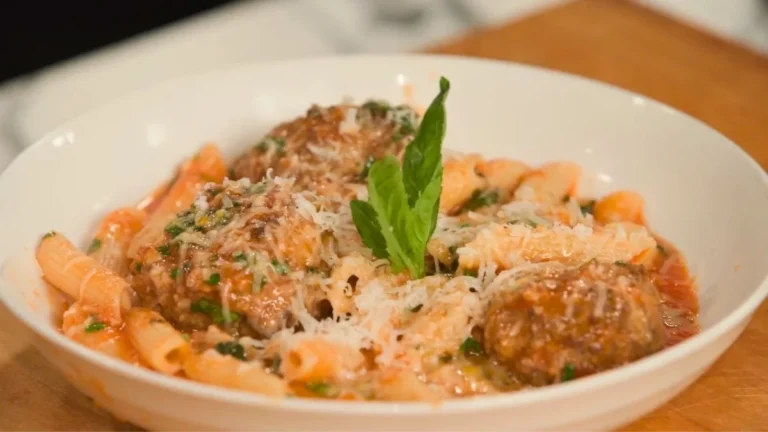

If you have ever wondered why restaurant meatballs are so incredibly tender and juicy while homemade ones sometimes turn out dry and dense, the answer is one word: panade.
This Panade Meatball Recipe, inspired by Chef Heidi Fink’s technique, uses a simple bread-and-buttermilk paste mixed directly into the meat to lock in moisture from the inside out.
Combined with a bold quick tomato sauce, Italian sausage, and fresh herbs, these baked Italian meatballs with pasta deliver deep, slow-cooked flavor in under an hour. This is the homemade meatball recipe you will keep coming back to for Sunday dinners, meal prep, and everything in between.
What Do Panade Meatballs with Pasta Taste Like?
These Italian meatballs are everything a great meatball should be -rich, savory, and impossibly tender. The panade gives each meatball a pillowy, melt-in-your-mouth interior, while the oven-baked exterior develops a beautifully golden, slightly crispy crust.
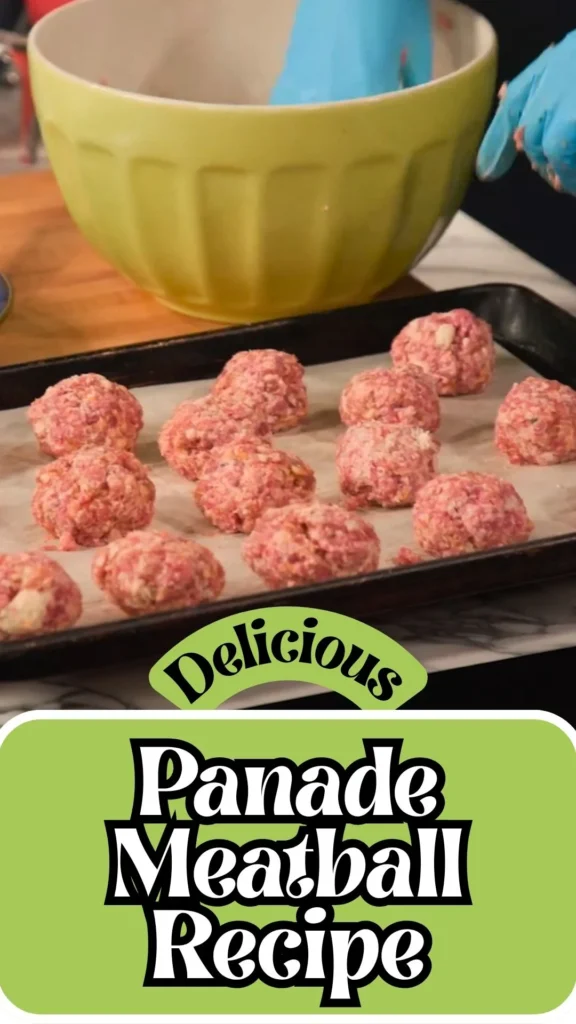
The blend of ground beef and Italian sausage creates a complex, well-seasoned depth of flavor with subtle fennel and spice notes.
Tossed in a bright, garlicky fresh tomato sauce loaded with basil and parsley, then finished with a snowfall of parmesan, every bite is a perfect balance of hearty meat, silky sauce, and al dente pasta. Pure Italian-American comfort food at its finest.
Ingredients & Kitchen Equipment
Ingredients
For the Panade (Bread Paste):
- 3 slices soft white bread, crusts removed, torn into small pieces
- ¾ cup buttermilk (strongly preferred; can substitute milk or milk + plain yogurt)
- ~1 teaspoon salt
- ~½ teaspoon freshly ground black pepper
- Optional heat: chili powder, cayenne, or use hot Italian sausage
For the Meatballs:
- 1 lb (450 g) ground beef
- 1 lb (450 g) Italian sausage, removed from casings
- The prepared panade (above)
For the Quick Tomato Sauce:
- Generous amount of olive oil
- A whole head’s worth of garlic, minced (be generous)
- Large bunch of fresh basil, chopped (divided -half for sauce, half for finishing)
- Large bunch of fresh parsley, chopped (divided -half for sauce, half for finishing)
- Optional: pinch of red chili flakes or fresh red chili
- Pureed tomatoes (blended whole peeled tomatoes or passata)
- Salt to taste
For the Pasta & Serving:
- Pasta of your choice (spaghetti, rigatoni, or pappardelle work beautifully)
- Freshly grated Parmesan cheese -generous amount
- Optional: fresh basil sprig for garnish
Kitchen Utensils
- Large mixing bowl
- Parchment-lined baking tray
- Heavy-bottom pot or Dutch oven
- Large pasta pot
- Wooden spoon or heat-safe spatula
- Tongs
- Blender or food processor (for pureeing tomatoes if using whole peeled)
- Sharp chef’s knife and cutting board
- Measuring cups and spoons
- Colander for draining pasta
- Fine-box grater (for parmesan)
Preparation Time, Cooking Time & Servings
- Prep Time: 15 minutes
- Cook Time: 40 minutes
- Total Time: ~55 minutes
- Servings: 4 generous servings
- Oven Temperature: 400°F (200°C)
- Difficulty: Intermediate
How to Make Panade Meatballs with Pasta
Step 1 – Make the Panade (Bread & Buttermilk Paste)
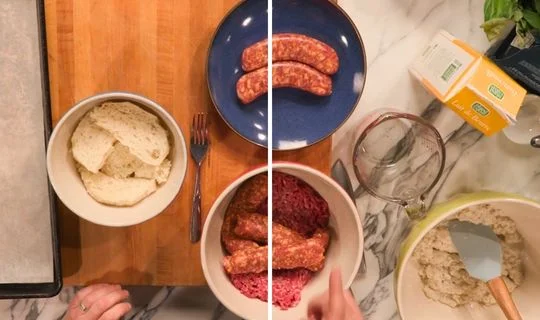
Remove the crusts from 3 slices of soft white bread and tear the bread into small pieces. Place them in a bowl and pour the buttermilk over the top. Add the salt and black pepper. Let the bread soak for several minutes until the buttermilk is fully absorbed, then mash everything together into a smooth, even paste. There should be no large dry lumps remaining -a fully smooth paste is the key to moist, tender meatballs.
Buttermilk is strongly preferred over regular milk here. Its slight acidity begins to break down the meat proteins before cooking even starts, resulting in a noticeably more tender meatball. If you don’t have buttermilk, mix regular milk with a spoonful of plain yogurt as a close substitute.
Step 2 -Mix the Meatball Mixture
Place the ground beef and Italian sausage (removed from their casings) into a large mixing bowl. Add the entire prepared panade. Mix thoroughly by hand, working the sausage, beef, and panade together until evenly distributed throughout. Do not overmix -combine until just uniform to keep the texture light and tender.
Step 3 -Roll and Bake the Meatballs
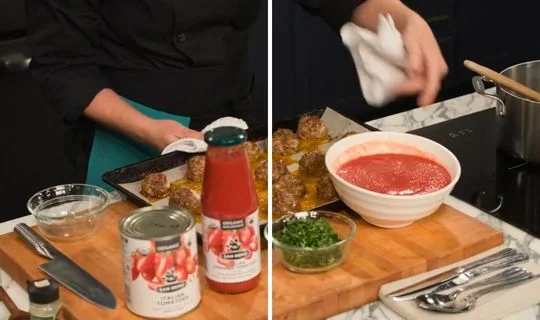
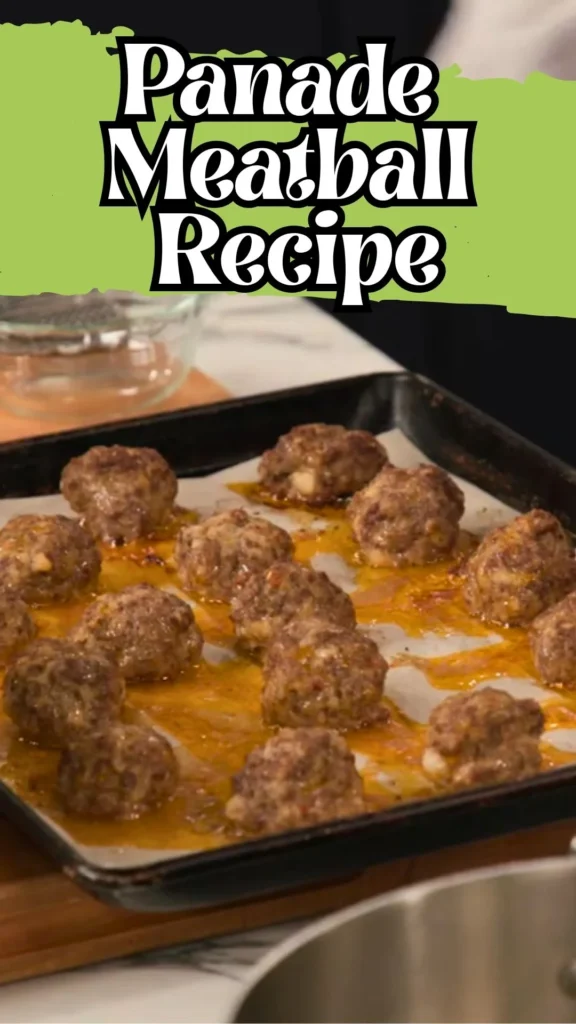
Preheat your oven to 400°F (200°C). Roll the meat mixture into meatballs of your preferred size – larger meatballs stay juicier and are Chef Heidi Fink’s preference. Place them on a parchment-lined baking tray with a little space between each. Bake for approximately 25 minutes until golden brown with a nicely developed crust on the outside. Do not discard the pan juices -every drop of those drippings goes into the sauce.
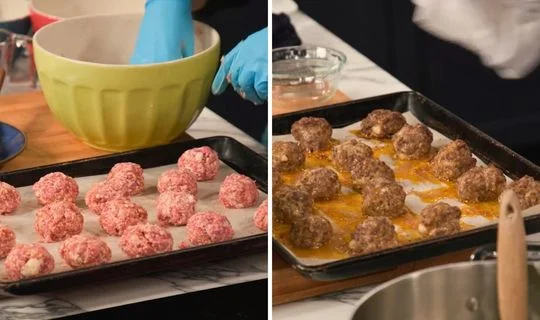
Baking Tip: Baking meatballs on a parchment-lined sheet at high heat allows all sides to develop a crust simultaneously without the need to stand over a skillet and turn them. It’s hands-free and gives a more even result than pan-frying.
Step 4 -Build the Quick Tomato Sauce
While the meatballs bake, heat a generous pour of olive oil in a heavy-bottom pot over medium-low heat. Add the minced garlic, half the chopped basil, half the chopped parsley, and the optional chili flakes. Warm gently for 30–60 seconds until fragrant -the goal is to bloom the aromatics in the oil, not to fry them. Do not let the garlic brown or burn. Add the pureed tomatoes and a little salt (go easy -the meatballs are already seasoned). Stir to combine and bring to a gentle simmer.
Step 5 -Add Meatballs and Their Juices to the Sauce
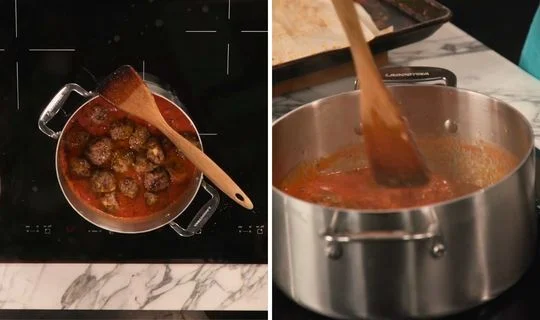
Once the meatballs are out of the oven, add them directly to the simmering tomato sauce along with every bit of the pan juices from the baking tray. Stir gently to coat. The drippings are packed with caramelized, savory flavor and will enrich the sauce significantly. Let everything simmer together gently while you cook the pasta.
Step 6 -Cook the Pasta
Bring a large pot of well-salted water to a boil. Cook your pasta according to package directions until al dente. Before draining, reserve ½ to 1 cup of starchy pasta water -this is your insurance policy for sauce consistency. Drain the pasta and add it directly into the pot with the meatballs and sauce.
Step 7 -Toss, Adjust, and Finish
Toss the pasta well in the sauce so every strand and noodle absorbs the tomato-meatball flavor. If the sauce is too thick, add splashes of the reserved pasta water until it reaches your desired consistency. If the sauce is too thin, simmer for a few more minutes.
Taste and adjust salt if needed. Right before serving, stir in the remaining fresh basil and parsley for a bright, double herb hit -cooked herbs in the sauce plus fresh herbs at the finish is what gives this dish its extraordinary aroma and complexity.
Step 8 -Serve
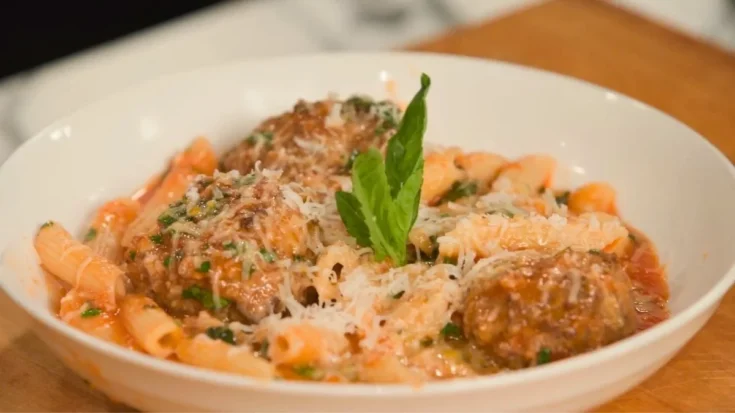
Portion 3 to 4 meatballs per person over a generous bed of sauced pasta. Top with a snowfall of freshly grated Parmesan cheese. Garnish with a fresh basil sprig if desired. Serve immediately.
Customization & Serving Ideas for Panade Meatballs
1. Use Hot Italian Sausage for a Spicier Meatball
Swap the mild Italian sausage for hot Italian sausage to build in bold, spicy heat from the very start. You can also add a pinch of cayenne or a teaspoon of chili powder directly into the panade for an extra layer of warmth. This version pairs especially well with a simple aglio e olio-style pasta or rigatoni that can hold the chunky sauce.
2. Make Them Smaller for Appetizer-Style Party Meatballs
Roll the mixture into bite-sized meatballs (about 1 inch in diameter) and reduce the bake time to 15–18 minutes. Serve them on a platter with toothpicks and a bowl of the tomato sauce for dipping. These mini panade meatballs are a crowd-pleasing appetizer for dinner parties, holiday gatherings, and game-day spreads.
3. Serve Over Creamy Polenta Instead of Pasta
Skip the pasta entirely and ladle the sauced meatballs over a bed of soft, creamy parmesan polenta. The rich, buttery polenta soaks up the tomato sauce beautifully and creates a deeply comforting, rustic Italian dish. This is an excellent gluten-free alternative that feels just as satisfying and indulgent as the original.
4. Make It a Meatball Sub
Pile 3–4 meatballs into a toasted hoagie roll, spoon over extra tomato sauce, and top generously with shredded mozzarella. Place under the broiler for 2–3 minutes until the cheese is bubbly and golden. These panade meatball subs are an outstanding way to use leftovers the next day -arguably even better than the original dinner.
5. Add a Layer of Béchamel for a Baked Meatball Pasta
Transfer the sauced pasta and meatballs to a large baking dish. Pour a simple béchamel (white sauce) over the top, dust with Parmesan, and bake at 375°F for 20 minutes until bubbling and golden. This transforms the dish into a baked meatball pasta casserole -perfect for feeding a large family or for a make-ahead dinner party centerpiece.
6. Pair with a Classic Caesar Salad
Serve alongside a crisp, homemade Caesar salad with romaine lettuce, shaved Parmesan, anchovy-spiked dressing, and golden croutons. The cool, acidic, crunchy salad provides the perfect counterpoint to the rich, hearty meatball pasta. Together, they make a complete and balanced Italian-American dinner that feels truly restaurant-worthy.
7. Finish with a Drizzle of Chili Oil or Basil Oil
Right before serving, drizzle a swirl of homemade chili oil or fresh basil oil over the top of each bowl. Chili oil adds a slow, lingering heat and glossy sheen; basil oil amplifies the fresh herbal notes already in the sauce. Either option elevates the presentation and adds a professional, chef-level finishing touch with virtually no extra effort.
Pro Tips for Perfect Panade Meatballs Every Time
1. The Panade Must Be Fully Smooth – No Dry Lumps
The single most common panade mistake is under-soaking the bread. The buttermilk needs to be completely absorbed and the bread fully mashed before you combine it with the meat. Any dry, unsoaked lumps of bread will create uneven texture in the finished meatball. Give it a full few minutes of soaking time and mash it vigorously with a fork until the paste is completely uniform.
2. Use a 50/50 Blend of Beef and Italian Sausage
Using only ground beef produces a meatball that is flavorful but one-dimensional. The Italian sausage brings fennel, herbs, and a natural seasoning complexity that ground beef alone simply cannot replicate. The 50/50 blend -1 lb of each -is the sweet spot for flavor, fat content, and texture. Do not be tempted to go all-beef.
3. Do Not Overwork the Meat Mixture
Mix the ground beef, sausage, and panade together only until the ingredients are evenly combined. Overworking the mixture develops the proteins in the meat, resulting in a tight, dense, rubbery meatball texture. Use your hands and mix with a light, folding motion -treat it gently and stop as soon as everything looks uniform.
4. Save Every Drop of Pan Juice from the Baking Tray
The golden-brown drippings that collect on the parchment-lined baking tray during roasting are extraordinarily flavorful. They contain rendered fat, caramelized meat juices, and concentrated umami. Pouring every bit of this liquid into your tomato sauce is a simple, zero-waste step that dramatically deepens the overall flavor of the dish. Never skip this.
5. Bloom the Garlic and Herbs in Olive Oil Before Adding Tomatoes
The technique of gently warming garlic and fresh herbs in olive oil before the tomatoes are added is called blooming -and it is one of the most impactful flavor steps in Italian cooking. The fat-soluble aromatic compounds in garlic and herbs dissolve into the warm oil, infusing it with flavor that then distributes evenly throughout the entire sauce. Rushing this step by cooking on high heat will burn the garlic and ruin the sauce base.
6. Always Reserve Pasta Water Before Draining
Starchy pasta water is one of the most underutilized tools in pasta cooking. The dissolved starch acts as a natural emulsifier, helping the sauce cling to the pasta rather than pooling at the bottom of the bowl. Keep ½ to 1 cup on standby and add it in small splashes as needed to loosen a too-thick sauce without diluting its flavor the way plain water would.

7. Add Fresh Herbs Twice -Once in the Sauce, Once at the End
This double herb technique is the secret behind the extraordinary aroma of this dish. Adding half the herbs early allows them to meld into the sauce and develop a mellow, cooked-herb depth. Stirring in the remaining fresh herbs right before serving preserves their bright, raw, garden-fresh flavor. Together, the two layers create a complexity that neither technique alone can achieve.
Storage & Reheating Guidance
- Refrigerator: Store meatballs and sauce together in an airtight container for up to 4 days. The flavors deepen overnight, making leftovers exceptional.
- Freezer: Meatballs and sauce freeze beautifully for up to 3 months. Freeze in portion-sized containers for easy weeknight meals. Store pasta separately.
- Reheat: Warm gently in a covered saucepan over low heat, adding a splash of water or broth to loosen the sauce. Cook fresh pasta when reheating for the best texture.
Frequently Asked Questions About Panade Meatballs
Here, we’ve got you covered with some common questions that people often ask
What is a panade and why do you use it in meatballs?
A panade is a paste made from bread soaked in liquid -in this case, buttermilk. When mixed into ground meat, the panade physically interrupts the dense protein structure of the meat, preventing it from seizing tightly during cooking. The result is a dramatically more tender, moist, and light meatball compared to meat-only versions. It is the single most impactful technique for improving homemade meatball texture.
Can I substitute buttermilk in the panade?
Yes. If you don’t have buttermilk on hand, you can substitute regular whole milk, or a combination of milk and a spoonful of plain yogurt for a closer approximation. The slight acidity of buttermilk is part of what makes it the preferred choice -it adds a subtle tang and begins tenderizing the meat proteins -but the panade will still work with regular milk and produce noticeably better meatballs than no panade at all.
Can I pan-fry these meatballs instead of baking them?
Absolutely. Pan-frying in olive oil or a neutral oil over medium-high heat will give you a deeper, darker sear on the outside of the meatball. The trade-off is that you will need to turn them carefully and work in batches to avoid crowding. Baking is more hands-off and produces a consistent all-around crust, but pan-frying delivers excellent results if you prefer that classic browned finish.
What pasta shape works best with meatballs?
Spaghetti is the classic and most iconic pairing, but thicker pasta shapes like rigatoni, pappardelle, or bucatini are arguably better for a hearty meatball sauce -their ridges and wide surface area grip the chunky tomato sauce more effectively. Avoid very thin pasta like angel hair, which can become overwhelmed by the weight and texture of large meatballs and a thick sauce.
Can I make the meatballs ahead of time?
Yes -this is one of the best make-ahead recipes in Italian home cooking. You can prepare and roll the raw meatballs up to 24 hours in advance and refrigerate them on the baking tray covered with plastic wrap. Alternatively, bake them fully, let them cool, and refrigerate for up to 3 days or freeze for up to 3 months before adding them to a fresh sauce when needed.
Why do my homemade meatballs always fall apart?
Meatballs typically fall apart for two reasons: the mixture is too wet, or the binder is insufficient. This panade recipe solves both problems -the bread paste acts as a powerful binder that holds the meat together while simultaneously keeping it moist. If your meatballs are still falling apart, make sure the panade paste is fully mashed (not chunky), and that you are mixing the meat mixture thoroughly enough for even distribution before rolling.
Can I make this recipe gluten-free?
Yes. Simply swap the regular white bread in the panade for a gluten-free white bread or gluten-free sandwich bread. The panade technique works identically with gluten-free bread -soak, mash, and combine as directed. Use gluten-free pasta for the remainder of the dish. The flavor and texture will be virtually indistinguishable from the original version.
How many meatballs does this recipe make?
The yield depends on the size you roll them. Chef Heidi Fink prefers larger meatballs, which typically yields around 12–16 meatballs from 2 lbs of meat. At 3–4 meatballs per serving, this recipe comfortably serves 4 people generously. For smaller meatballs, you can expect 20–24 pieces from the same quantity of meat, making it ideal for stretching into appetizers or a larger crowd.
This Panade Meatball Recipe is more than just a dinner -it is a masterclass in one foundational technique that will permanently change how you make meatballs at home.
Panade Meatball Recipe
This Panade Meatball Recipe, inspired by Chef Heidi Fink’s technique, uses a simple bread-and-buttermilk paste mixed directly into the meat to lock in moisture from the inside out.
Ingredients
- 3 slices soft white bread, crusts removed, torn into small pieces
- ¾ cup buttermilk (strongly preferred; can substitute milk or milk + plain yogurt)
- ~1 teaspoon salt
- ~½ teaspoon freshly ground black pepper
- Optional heat: chili powder, cayenne, or use hot Italian sausage
- 1 lb (450 g) ground beef
- 1 lb (450 g) Italian sausage, removed from casings
- The prepared panade (above)
- Generous amount of olive oil
- A whole head’s worth of garlic, minced (be generous)
- Large bunch of fresh basil, chopped (divided -half for sauce, half for finishing)
- Large bunch of fresh parsley, chopped (divided -half for sauce, half for finishing)
- Optional: pinch of red chili flakes or fresh red chili
- Pureed tomatoes (blended whole peeled tomatoes or passata)
- Salt to taste
- Pasta of your choice (spaghetti, rigatoni, or pappardelle work beautifully)
- Freshly grated Parmesan cheese -generous amount
- Optional: fresh basil sprig for garnish
Instructions
Step 1 – Make the Panade (Bread & Buttermilk Paste)
Remove the crusts from 3 slices of soft white bread and tear the bread into small pieces. Place them in a bowl and pour the buttermilk over the top. Add the salt and black pepper. Let the bread soak for several minutes until the buttermilk is fully absorbed, then mash everything together into a smooth, even paste. There should be no large dry lumps remaining -a fully smooth paste is the key to moist, tender meatballs.
Buttermilk is strongly preferred over regular milk here. Its slight acidity begins to break down the meat proteins before cooking even starts, resulting in a noticeably more tender meatball. If you don’t have buttermilk, mix regular milk with a spoonful of plain yogurt as a close substitute.
Step 2 -Mix the Meatball Mixture
Place the ground beef and Italian sausage (removed from their casings) into a large mixing bowl. Add the entire prepared panade. Mix thoroughly by hand, working the sausage, beef, and panade together until evenly distributed throughout. Do not overmix -combine until just uniform to keep the texture light and tender.
Step 3 -Roll and Bake the Meatballs
Preheat your oven to 400°F (200°C). Roll the meat mixture into meatballs of your preferred size – larger meatballs stay juicier and are Chef Heidi Fink’s preference. Place them on a parchment-lined baking tray with a little space between each. Bake for approximately 25 minutes until golden brown with a nicely developed crust on the outside. Do not discard the pan juices -every drop of those drippings goes into the sauce.
Baking Tip: Baking meatballs on a parchment-lined sheet at high heat allows all sides to develop a crust simultaneously without the need to stand over a skillet and turn them. It’s hands-free and gives a more even result than pan-frying.
Step 4 -Build the Quick Tomato Sauce
While the meatballs bake, heat a generous pour of olive oil in a heavy-bottom pot over medium-low heat. Add the minced garlic, half the chopped basil, half the chopped parsley, and the optional chili flakes. Warm gently for 30–60 seconds until fragrant -the goal is to bloom the aromatics in the oil, not to fry them.
Do not let the garlic brown or burn. Add the pureed tomatoes and a little salt (go easy -the meatballs are already seasoned). Stir to combine and bring to a gentle simmer.
Step 5 -Add Meatballs and Their Juices to the Sauce
Once the meatballs are out of the oven, add them directly to the simmering tomato sauce along with every bit of the pan juices from the baking tray. Stir gently to coat. The drippings are packed with caramelized, savory flavor and will enrich the sauce significantly. Let everything simmer together gently while you cook the pasta.
Step 6 -Cook the Pasta
Bring a large pot of well-salted water to a boil. Cook your pasta according to package directions until al dente. Before draining, reserve ½ to 1 cup of starchy pasta water -this is your insurance policy for sauce consistency. Drain the pasta and add it directly into the pot with the meatballs and sauce.
Step 7 -Toss, Adjust, and Finish
Toss the pasta well in the sauce so every strand and noodle absorbs the tomato-meatball flavor. If the sauce is too thick, add splashes of the reserved pasta water until it reaches your desired consistency. If the sauce is too thin, simmer for a few more minutes.
Step 8 -Serve
Portion 3 to 4 meatballs per person over a generous bed of sauced pasta. Top with a snowfall of freshly grated Parmesan cheese. Garnish with a fresh basil sprig if desired. Serve immediately.
Notes
Refrigerator: Store meatballs and sauce together in an airtight container for up to 4 days. The flavors deepen overnight, making leftovers exceptional.
Freezer: Meatballs and sauce freeze beautifully for up to 3 months. Freeze in portion-sized containers for easy weeknight meals. Store pasta separately.
Reheat: Warm gently in a covered saucepan over low heat, adding a splash of water or broth to loosen the sauce. Cook fresh pasta when reheating for the best texture.
Nutrition Information:
Yield:
4Serving Size:
1Amount Per Serving: Calories: 432
We’d love to know how this recipe works out for you! Give it a try and leave a comment below to share your experience, tips, or any tweaks you made. Don’t forget to follow us on Pinterest and YouTube for more tasty recipes and kitchen inspiration. Your support and feedback truly mean everything to us!