
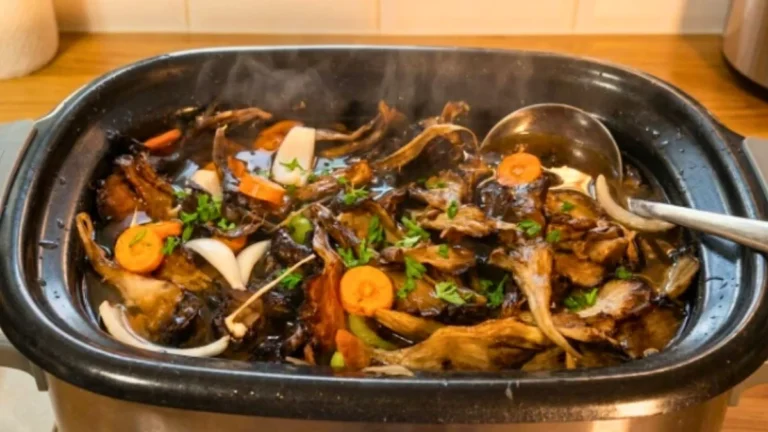

If you’ve ever stumbled upon a black staining polypore mushroom on a foraging walk and wondered what to do with it, you’re in the right place.
This black staining polypore recipe transforms this fascinating wild fungus into one of the most deeply savory, beef-like broths you’ll ever taste -without a single drop of meat.
Prized by foragers for its bold umami flavor and impressive yield, the black staining polypore is an underrated gem in the wild mushroom world. Whether you’re a seasoned forager or a curious home cook exploring wild edibles, this slow-simmered mushroom broth is a rewarding, delicious place to start.
Foraging Safety Disclaimer: Never consume any wild mushroom unless you or a certified local expert has positively identified it with complete certainty. Even confirmed black staining polypore edible specimens can cause reactions in sensitive individuals. Always cook thoroughly and test a very small amount first, waiting 24 hours before consuming more.
What Does Black Staining Polypore Taste Like?
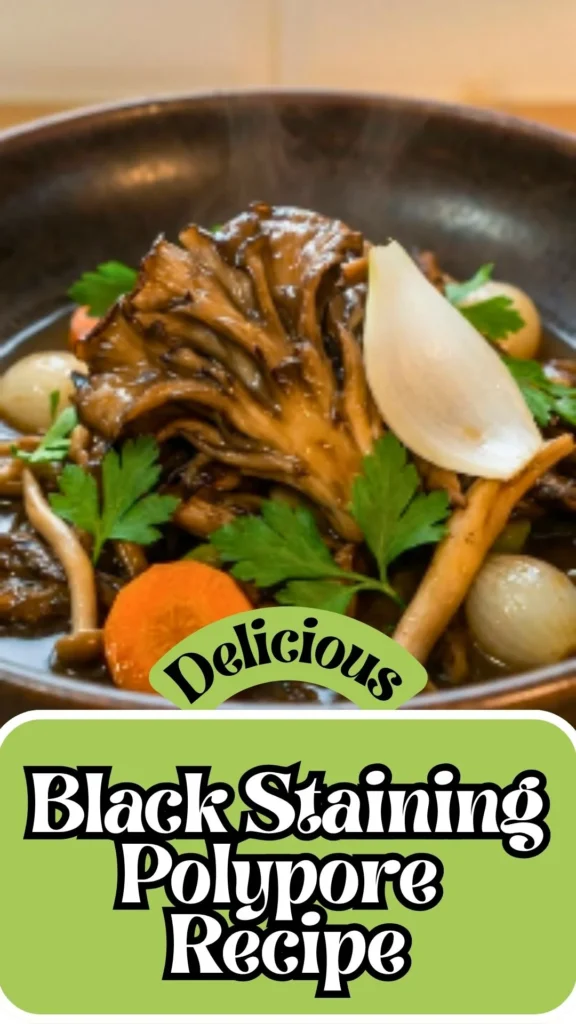
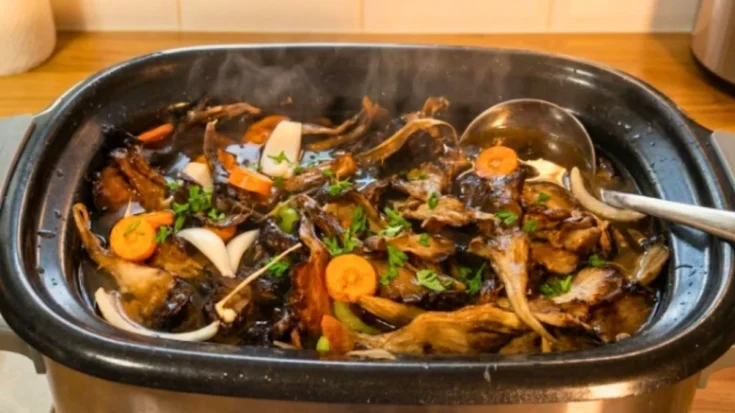
The black staining polypore taste is one of its most impressive qualities. When simmered low and slow, this wild mushroom releases a broth that is remarkably dark, rich, and deeply savory -often compared to a full-bodied beef stock.

The flavor carries strong umami notes with an earthy, woodsy backbone that’s bold enough to anchor soups, gravies, and stews.
Unlike delicate mushrooms such as chanterelles, the young black staining polypore holds its flavor intensity through long cooking, making it ideal for broth-making where depth and richness are the goal.
Black Staining Polypore Ingredients
For the Mushroom Broth
- Approximately 2 gallons black staining polypore mushrooms (fresh or frozen)
- 2 large cloves elephant garlic (or standard garlic)
- 1 large yellow or white onion
- 2 stalks celery
- 2 medium carrots
- 2 tablespoons salt
- Freshly cracked black pepper, generous amount
- Water, enough to submerge all ingredients by at least 2 inches
Kitchen Utensils You’ll Need
- Large stockpot (strongly recommended over an Instant Pot or slow cooker to prevent boil-overs and allow easy water monitoring)
- Fine-mesh strainer or cheesecloth
- Large mixing bowl (for straining into)
- Cutting board and sharp chef’s knife
- Wooden spoon or large spatula
- Measuring spoons
- Freezer-safe storage bags or airtight glass jars
Preparation and Cooking Time
- Prep Time: 15 minutes
- Cook Time: 2 hours
- Total Time: 2 hours 15 minutes
- Servings: Makes approximately 1–2 quarts of rich mushroom broth
- Yield: Varies depending on mushroom water content
How to Cook Black Staining Polypore -Step-by-Step Instructions
Step 1: Prepare the Vegetables
Crush the garlic cloves firmly to loosen the papery skin, then remove the skin. Leave them crushed but whole -this allows the garlic flavor to slowly leach into the broth over the long simmer without turning bitter. Peel the onion and cut it into eighths. Remove the leafy ends of the celery stalks and chop them into small pieces to maximize surface area for flavor extraction. Chop the carrots into small rounds.
Step 2: Combine Everything in the Stockpot
Place the crushed garlic, onion, celery, and carrots into a large stockpot. Add the salt and a very generous amount of freshly cracked black pepper -don’t be shy here, as pepper is key to the broth’s depth. Add the black staining polypore mushrooms directly into the pot. If you’re using frozen mushrooms, make sure to pour in any liquid they released while thawing, as that liquid carries concentrated flavor.
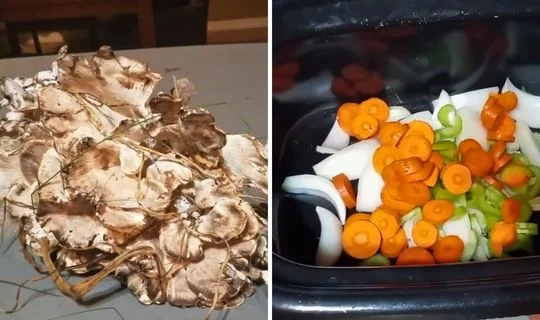
Step 3: Cover and Bring to a Simmer
Pour in enough water to submerge all the ingredients by at least 2 inches. Bring the pot to a full boil over high heat, then immediately reduce the heat to a low, steady simmer. Let everything cook for approximately 2 hours. Check the pot periodically -if the water level drops significantly as it simmers, add more water to keep the mushrooms fully submerged throughout the cooking time.
Step 4: Strain the Broth and Squeeze the Mushrooms
Set a fine-mesh strainer over a large bowl and carefully pour the entire contents of the pot through it. Once the solid ingredients are resting in the strainer, use the back of a large spoon or a spatula to press and squeeze the mushrooms firmly. The black staining polypore mushroom acts like a dense sponge, holding onto the most concentrated, flavor-packed liquid -squeezing them releases that final burst of rich broth. Discard or compost the spent mushrooms and vegetables.
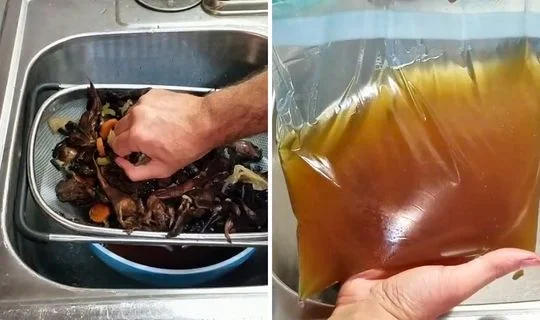
Customization and Serving Ideas for Black Staining Polypore Broth
This rich black staining polypore recipe produces a remarkably versatile broth. Here are seven ways to use and customize it once it’s made.
1. Use It as a Vegetarian Beef Stock Substitute
The most natural use for this broth is as a direct substitute for beef stock in any recipe. Its dark color and deep umami flavor make it a seamless swap in French onion soup, pot roast braising liquid, or beef stew -delivering the same richness without any meat involved. It’s a game-changer for vegetarian and vegan cooking.
2. Build a Hearty Wild Mushroom Soup
Use the finished broth as the base for a chunky mushroom soup. Add sautéed cremini or shiitake mushrooms, diced potatoes, thyme, and a splash of cream or coconut cream. The black staining polypore broth gives the soup an intensity that store-bought stock simply cannot match.
3. Deepen Gravies and Pan Sauces
Stir a ladleful of this broth into a pan sauce after searing pork, chicken, or vegetables. It adds body, color, and a savory complexity that elevates even the simplest weeknight dinner. Reduce it slightly in the pan for a glossy, restaurant-quality gravy.
4. Simmer Grains and Legumes in It
Replace plain water with this mushroom broth when cooking rice, farro, barley, or lentils. The grains absorb the savory depth as they cook, transforming a basic side dish into something deeply flavorful without any additional seasoning.
5. Add Aromatics for a Customized Flavor Profile
During the simmer, feel free to add fresh thyme sprigs, a bay leaf, or a small piece of dried kombu seaweed to layer in additional umami. A splash of soy sauce or tamari stirred in at the end deepens the color and saltiness beautifully.
6. Freeze in Portions for Convenient Use
Pour cooled broth into ice cube trays, freeze solid, and then transfer the cubes to a freezer bag. This gives you ready-to-use tablespoon-sized portions of concentrated black staining polypore broth perfect for deglazing pans or enriching sauces without needing to thaw a full batch.
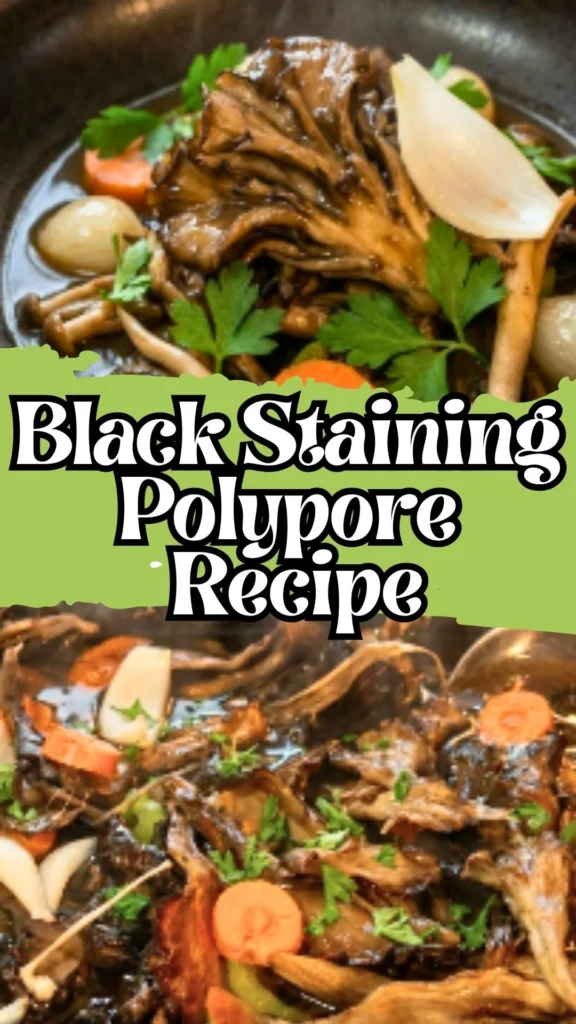
7. Pair for Balanced Meal
Make this Black Staining Polypore Recipe for a rich, earthy dish with deep flavor, and pair it with our olive garden garlic mashed potatoes and olive garden house salad recipe for a comforting, balanced meal.
Tips for the Best Black Staining Polypore Mushroom Recipe
Getting the most out of a foraged mushroom takes a little know-how. These tips will help you make the richest, safest, and most flavorful broth possible.
1. Always Positively Identify Before Cooking
This tip cannot be overstated. The black staining polypore gets its name from the dark staining that occurs when the flesh is cut or bruised. Learn this and other identifying features -pore surface, growth pattern, habitat -before harvesting. When in doubt, consult a local mycologist or foraging group. No recipe is worth the risk of misidentification.
2. Use Young Black Staining Polypore for Better Flavor
The young black staining polypore produces noticeably better broth than older, more mature specimens. Younger mushrooms are firmer, fresher, and release a cleaner, more vibrant flavor into the liquid. Older specimens can become tough, woody, and slightly bitter. Harvest when the pores are tight and the flesh is firm.
3. Don’t Skip the Squeeze
When straining, pressing the cooked mushrooms firmly is not optional -it’s essential. The mushroom flesh absorbs an enormous amount of broth during the simmer and holds the most concentrated flavor. Skipping this step can leave a significant portion of your best broth behind in the strainer.
4. Simmer Low and Slow on the Stovetop
While the video demonstrated an Instant Pot version, a traditional stovetop simmer gives you better control over water levels and extraction. A rolling boil can cloud the broth and cause unexpected boil-overs with this volume of mushrooms. A low, steady simmer over two hours coaxes out the deepest, cleanest flavor.
5. Season Conservatively -You Can Always Add More
The broth is already salted during cooking, but remember that when you reduce it further in a sauce or soup, the saltiness concentrates. Start with 2 tablespoons of salt as directed and taste the finished broth before adding more. It’s much easier to add salt than to fix an over-salted batch.
6. Frozen Mushrooms Work Beautifully
If you foraged a large haul of black staining polypore mushrooms and froze them for later, they are perfect for this recipe. The freezing process actually breaks down the cell walls, which can enhance liquid and flavor release during cooking. Include any liquid from thawing directly in the pot for maximum yield.
7. Do a Tolerance Test Before Eating Freely
Even properly identified, thoroughly cooked black staining polypore edible mushrooms can cause mild digestive reactions in some individuals. The first time you consume this broth, try a small amount and wait at least 24 hours before eating more. This is standard best practice for any foraged wild mushroom, regardless of its edibility rating.
Storage and Reheating
Allow the finished broth to cool completely before storing. Refrigerate in airtight glass jars for up to 5 days, or pour into freezer-safe bags and freeze for up to 3 months. Reheat gently on the stovetop over medium-low heat -do not microwave in sealed containers.
Frequently Asked Questions
Here, we’ve got you covered with some common questions that people often ask
Is black staining polypore edible?
Yes, the black staining polypore is considered edible, but it must be positively identified and always thoroughly cooked before consuming. It is not recommended eaten raw. As with all wild mushrooms, individual tolerance can vary, so always do a small test amount first and wait 24 hours before eating more.
What does black staining polypore taste like?
The black staining polypore produces a bold, deeply savory, umami-rich flavor when cooked -especially when simmered into broth. Many foragers describe the resulting broth as comparable to a rich beef stock in color, depth, and intensity, making it an outstanding vegetarian alternative.
How do you identify black staining polypore mushroom?
The black staining polypore (Meripilus sumstinei or Meripilus giganteus depending on region) typically grows in large clusters at the base of hardwood trees. Its most distinctive feature is the dark black staining of the flesh and pores when cut, bruised, or exposed to air. Always consult a field guide or local expert before consuming any wild mushroom.
What is young black staining polypore and why does it matter?
Young black staining polypore refers to freshly emerged, firm specimens that haven’t yet become tough or woody with age. Younger mushrooms are significantly better for cooking -they produce a fresher, more flavorful broth and have a better texture overall. Harvest early in the fruiting season for best results.
Can I use black staining polypore mushrooms from the freezer?
Absolutely. Frozen black staining polypore mushrooms work very well in this broth recipe. Freezing breaks down the cell walls slightly, which can actually improve liquid and flavor extraction during simmering. Always include any thawing liquid in your pot -it’s packed with flavor.
How to cook black staining polypore other than making broth?
While broth is the most popular preparation due to the mushroom’s tough, fibrous texture when mature, younger specimens can be sautéed in butter or olive oil with garlic and herbs. They can also be used to flavor stews, soups, and slow-cooked dishes where their texture softens over long cooking times.
Can I make this recipe in an Instant Pot or slow cooker?
You can use an Instant Pot on the “Bake” or slow-cook function for approximately 2 hours and 10 minutes. However, a stovetop stockpot is strongly recommended because the large volume of mushrooms can cause boil-overs in a pressure environment, and you can more easily monitor and adjust the water level throughout the cook.
Black Staining Polypore Recipe
If you’ve ever stumbled upon a black staining polypore mushroom on a foraging walk and wondered what to do with it, you’re in the right place.
Ingredients
- Approximately 2 gallons black staining polypore mushrooms (fresh or frozen)
- 2 large cloves elephant garlic (or standard garlic)
- 1 large yellow or white onion
- 2 stalks celery
- 2 medium carrots
- 2 tablespoons salt
- Freshly cracked black pepper, generous amount
- Water, enough to submerge all ingredients by at least 2 inches
Instructions
Step 1: Prepare the Vegetables
Crush the garlic cloves firmly to loosen the papery skin, then remove the skin. Leave them crushed but whole -this allows the garlic flavor to slowly leach into the broth over the long simmer without turning bitter. Peel the onion and cut it into eighths. Remove the leafy ends of the celery stalks and chop them into small pieces to maximize surface area for flavor extraction. Chop the carrots into small rounds.
Step 2: Combine Everything in the Stockpot
Place the crushed garlic, onion, celery, and carrots into a large stockpot. Add the salt and a very generous amount of freshly cracked black pepper -don’t be shy here, as pepper is key to the broth’s depth. Add the black staining polypore mushrooms directly into the pot. If you’re using frozen mushrooms, make sure to pour in any liquid they released while thawing, as that liquid carries concentrated flavor.
Step 3: Cover and Bring to a Simmer
Pour in enough water to submerge all the ingredients by at least 2 inches. Bring the pot to a full boil over high heat, then immediately reduce the heat to a low, steady simmer. Let everything cook for approximately 2 hours. Check the pot periodically -if the water level drops significantly as it simmers, add more water to keep the mushrooms fully submerged throughout the cooking time.
Step 4: Strain the Broth and Squeeze the Mushrooms
Set a fine-mesh strainer over a large bowl and carefully pour the entire contents of the pot through it. Once the solid ingredients are resting in the strainer, use the back of a large spoon or a spatula to press and squeeze the mushrooms firmly. The black staining polypore mushroom acts like a dense sponge, holding onto the most concentrated, flavor-packed liquid -squeezing them releases that final burst of rich broth. Discard or compost the spent mushrooms and vegetables.
Notes
Foraging Safety Disclaimer: Never consume any wild mushroom unless you or a certified local expert has positively identified it with complete certainty. Even confirmed black staining polypore edible specimens can cause reactions in sensitive individuals. Always cook thoroughly and test a very small amount first, waiting 24 hours before consuming more.
Nutrition Information:
Yield:
4Serving Size:
1Amount Per Serving: Calories: 367
We’d love to know how this recipe works out for you! Give it a try and leave a comment below to share your experience, tips, or any tweaks you made. Don’t forget to follow us on Pinterest and YouTube for more tasty recipes and kitchen inspiration. Your support and feedback truly mean everything to us!